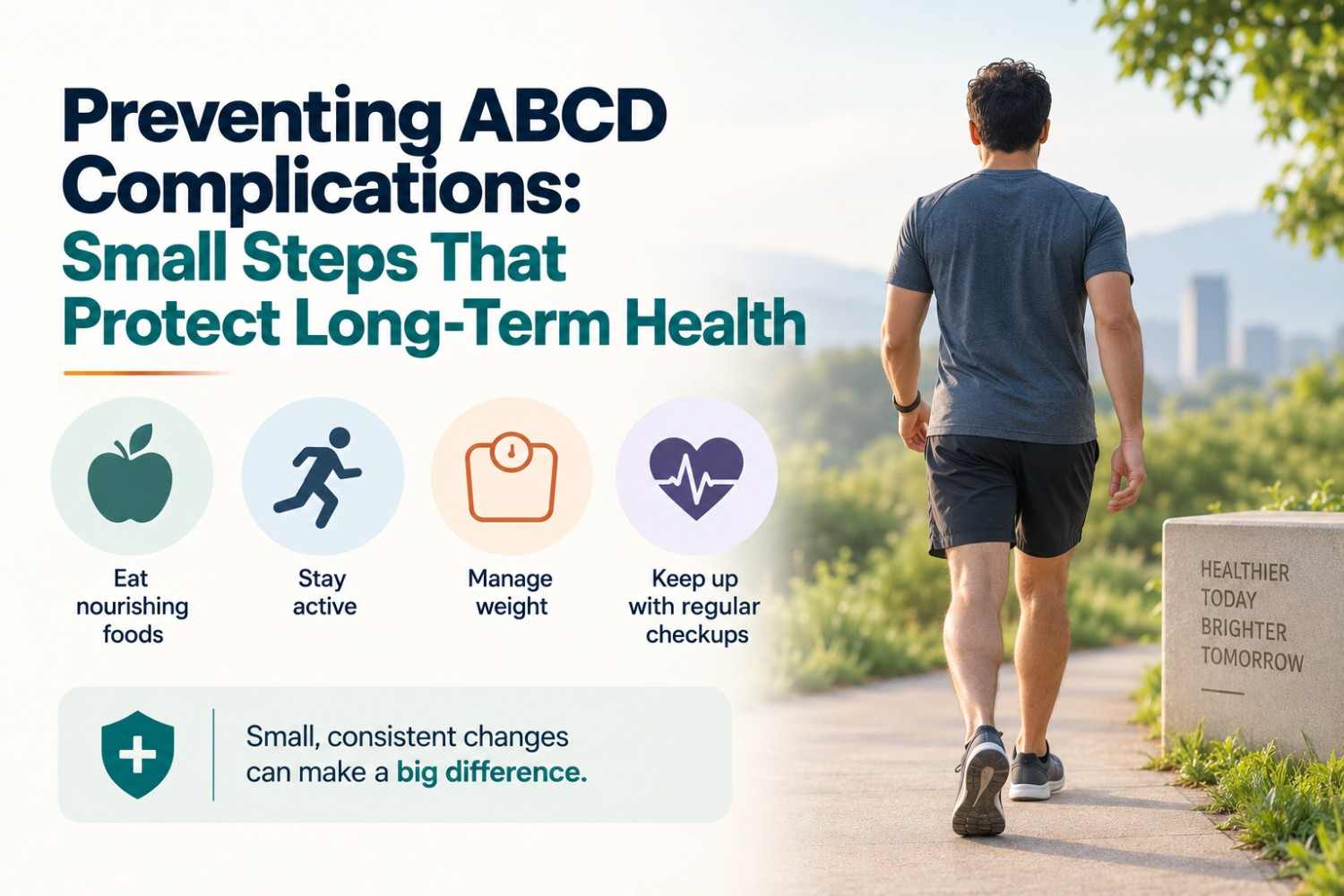
Preventing ABCD Complications: Small Steps That Protect Long-Term Health is an important question because adiposity-based chronic disease is assessed by health impact, not body size alone.
Preventing ABCD Complications: A Practical, Staged Approach
Adiposity-Based Chronic Disease does not progress from adiposity to serious complications overnight; it typically moves through identifiable stages over years, which means there is real, meaningful opportunity to prevent or delay progression at nearly every point along the way. Understanding what actually reduces risk at each stage helps turn a potentially overwhelming long-term concern into a series of concrete, manageable actions.
Why Prevention Matters More the Earlier You Start
Intervening at Stage 0 or Stage 1, before established complications like diabetes or significant fatty liver disease have developed, generally produces better long-term outcomes with less intensive treatment than waiting until Stage 2 or beyond, covered in more detail in our article on how doctors stage ABCD. This is a strong argument for proactive testing and lifestyle intervention rather than waiting for symptoms or an established diagnosis to prompt action.
The Core Preventive Interventions
Reducing Visceral Fat Through Diet
Reducing refined carbohydrate and added sugar, prioritising protein, fibre, and healthy fats, and maintaining a sustained, moderate calorie deficit when weight loss is appropriate all target visceral fat specifically, the fat most strongly linked to insulin resistance and downstream complications, covered in more depth in our article on diet for ABCD.
Regular Exercise, Both Aerobic and Resistance
A combination of aerobic exercise and resistance training improves insulin sensitivity, supports visceral fat reduction, and maintains muscle mass, all directly relevant to preventing progression through ABCD stages, covered further in our article on exercise for ABCD patients.
Adequate Sleep
Poor sleep independently worsens insulin sensitivity and is linked to sleep apnea, itself both a complication and a driver of further metabolic dysfunction, making sleep quality a genuinely relevant, often overlooked preventive factor.
Regular Screening, Not Just Symptom-Driven Testing
Because early-stage complications are frequently silent, regular screening for blood pressure, fasting insulin, lipid profile, and liver enzymes, rather than testing only when symptoms appear, catches problems at a more treatable stage.
Preventing Specific Complications
Sleep apnea prevention benefits from weight management and, where indicated, early evaluation of symptoms like snoring or witnessed breathing pauses, covered in our related article on ABCD and sleep apnea. Fatty liver disease prevention centres on improving insulin sensitivity through the same diet and exercise interventions described above, covered further in ABCD and fatty liver disease. Hypertension prevention benefits particularly from visceral fat reduction and regular blood pressure monitoring, covered in ABCD and high blood pressure screening.
Why a Coordinated Approach Works Better Than Isolated Efforts
Because these complications share common underlying drivers, insulin resistance and visceral fat, a coordinated approach addressing diet, exercise, sleep, and regular screening together tends to reduce risk across multiple complications simultaneously, rather than requiring a separate, disconnected strategy for each individual condition.
Building a Sustainable, Long-Term Plan
Prevention is not a short-term project but an ongoing, sustained effort over years, which is why building habits that are realistically maintainable, rather than an intense but temporary intervention, tends to produce better long-term results. Working with a physician to periodically reassess your stage and adjust your plan accordingly keeps prevention efforts aligned with your actual, current risk.
What to Do If You Already Have a Complication
Even with an established complication already present, the same core interventions, diet, exercise, sleep, and regular monitoring, remain central to preventing further progression and additional complications, working alongside any specific medical treatment already required for the existing condition, an integrated approach used at ABCD Health.
Build Your ABCD Prevention Plan
Frequently Asked Questions (FAQs)
1. Is it too late to focus on prevention if I already have a complication?
No, the same core interventions remain valuable for preventing further progression and additional complications, even alongside treatment for an existing condition.
2. How often should screening tests be repeated for prevention purposes?
Annually is reasonable for most people, with more frequent testing for those at Stage 1 or beyond, or actively working on lifestyle changes.
3. Can preventing one complication help prevent others too?
Yes, since many complications share common underlying drivers, addressing insulin resistance and visceral fat broadly tends to reduce risk across multiple potential complications simultaneously.
4. Does prevention require expensive testing or programmes?
Most core preventive interventions, diet, exercise, sleep, and standard screening tests, are widely accessible and not prohibitively expensive for most patients.
5. How quickly can preventive lifestyle changes reduce complication risk?
Meaningful improvement in relevant biomarkers is often seen within three to six months of consistent change, though the full risk-reduction benefit accumulates over a longer period.
6. Should family members of someone with ABCD also focus on prevention?
Yes, given the genetic and shared-environment risk factors involved, family members, particularly those with a family history of diabetes or related conditions, can benefit from similar proactive screening and prevention.
7. What is the single most important preventive step to start with?
There isn't one universal answer, but getting a thorough baseline evaluation, including fasting insulin and waist circumference, is a reasonable, concrete first step to identify your specific priorities.
This article is for educational purposes and does not replace personalized medical advice. Please consult a qualified physician before making changes to your treatment, medication, or health screening plan.