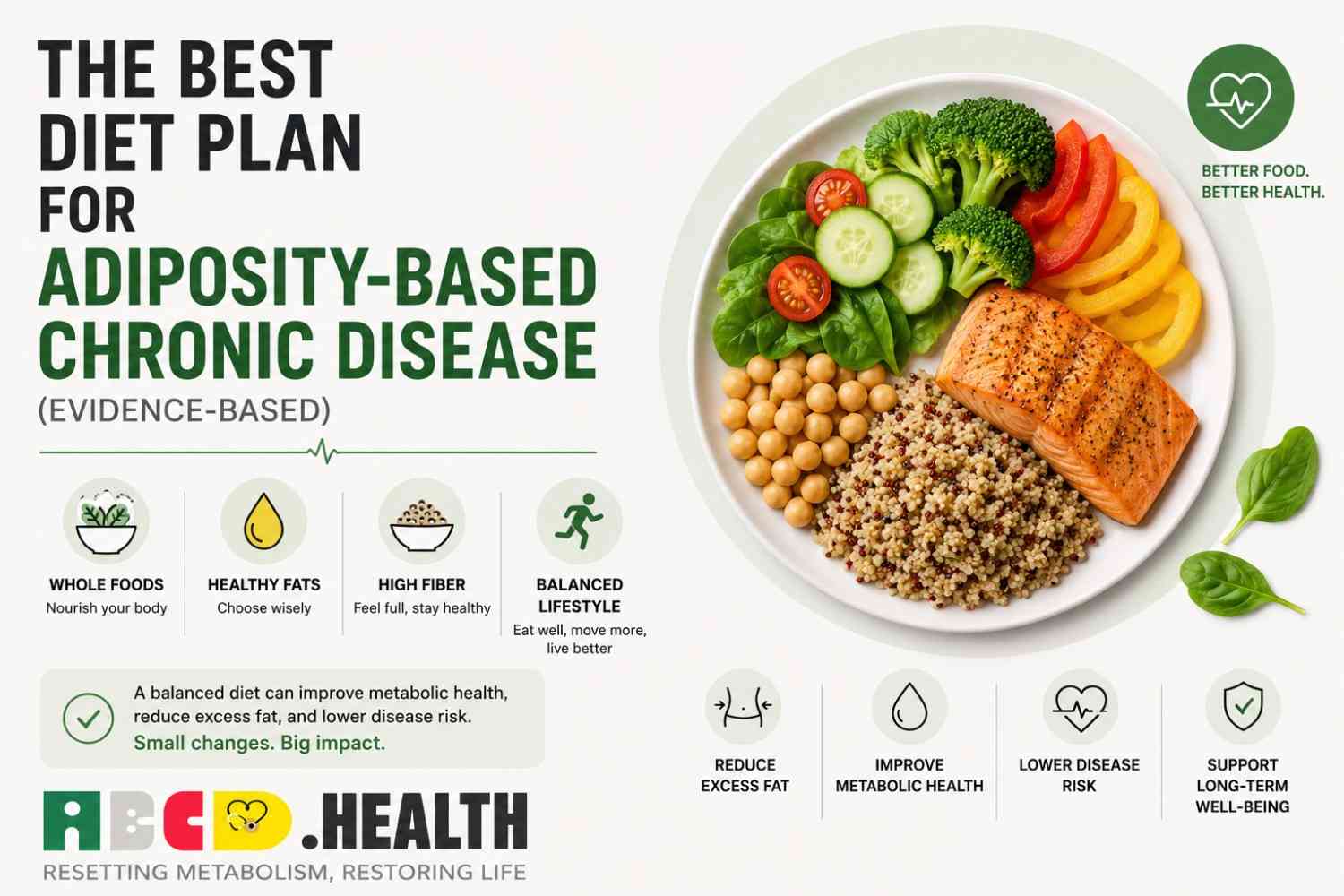
Treating ABCD through diet isn't about a specific named plan. It's about a specific set of principles that target fat tissue dysfunction directly.
The Best Diet Plan for Adiposity-Based Chronic Disease (Evidence-Based)
Patients diagnosed with Adiposity-Based Chronic Disease often ask for "the ABCD diet," expecting a specific named plan. There isn't one, and that's actually the more clinically honest position: no single named diet (keto, intermittent fasting, low-fat, or otherwise) has been shown to outperform the others for every person with ABCD. What the evidence does support is a consistent set of nutritional principles that directly target the fat tissue dysfunction, insulin resistance, and inflammation at the core of the disease, regardless of which specific eating pattern delivers them.
Principle 1: A Sustained, Moderate Calorie Deficit
Meaningful fat loss requires a calorie deficit, but the size and pace of that deficit matters for ABCD specifically. Very aggressive deficits tend to accelerate lean mass loss and are harder to sustain, which undermines the durability of reversal discussed in our article on whether ABCD can be reversed. A moderate, sustainable deficit, generally aiming for gradual, steady loss rather than rapid loss, tends to produce better long-term outcomes for fat tissue function specifically.
Principle 2: Adequate Protein at Every Meal
Protein does double duty in ABCD nutrition: it preserves lean mass during a calorie deficit, and it improves satiety, making the deficit easier to sustain. A general target in the range of 1.2–1.6 grams per kilogram of body weight per day is a reasonable starting point for most people undergoing active fat loss, distributed across meals rather than concentrated in one, since this appears to support muscle preservation more effectively than the same total consumed in a single sitting.
Principle 3: Minimising Refined Carbohydrate and Added Sugar
Because insulin resistance is central to ABCD pathophysiology, as covered in our article on insulin resistance treatment, reducing the glycemic load of the diet, primarily by cutting refined carbohydrates and sugar-sweetened beverages, directly addresses one of the disease's core drivers rather than simply reducing calories in a generic way. This doesn't require eliminating carbohydrates altogether; it means prioritising fibre-rich, minimally processed sources over refined ones.
Principle 4: Sufficient Fibre
Dietary fibre, from vegetables, legumes, and whole grains, slows glucose absorption, feeds beneficial gut bacteria in ways linked to reduced systemic inflammation, and supports satiety. Most dietary guidance, including from the World Health Organization, recommends considerably more fibre than the typical urban Indian diet currently includes, and increasing it is one of the more consistently beneficial, low-risk changes available.
Principle 5: Managing Meal Timing and Frequency Individually
Approaches like time-restricted eating or intermittent fasting can be effective tools for some people with ABCD, primarily by naturally reducing total calorie intake and, in some studies, improving insulin sensitivity independent of weight loss. They are not required for reversal, however, and are best considered a personal preference and adherence tool rather than a mandatory component of treatment.
What the Diet Should Avoid Doing
A diet plan that produces rapid weight loss at the expense of significant muscle mass, that is so restrictive it cannot be sustained beyond a few weeks, or that ignores protein and fibre entirely in favour of calorie counting alone, tends to work against ABCD reversal even when the scale shows short-term progress. This is part of why our approach at ABCD Health builds a nutrition plan around these principles individually, rather than prescribing a single named diet to every patient regardless of their stage, preferences, or existing health conditions.
Combining Diet With Exercise
Diet alone can produce fat loss, but combining it with resistance training, covered in detail in our article on exercise for ABCD patients, produces meaningfully better preservation of lean mass and often better long-term metabolic outcomes than diet change alone. The two are best thought of as complementary parts of the same treatment plan rather than alternatives to choose between.
A Sample Structure for a Day's Meals
Rather than a rigid meal plan, it's more useful to think in terms of structure. A typical day built around these principles might include a protein-forward breakfast, such as eggs or paneer with vegetables, rather than carbohydrate-heavy options like sweetened cereal or plain toast, which tend to produce a sharper glucose spike and leave less room for satiety early in the day. Lunch and dinner built around a palm-sized portion of protein, a generous serving of non-starchy vegetables, a moderate portion of whole grain or legume-based carbohydrate, and a source of healthy fat such as nuts or olive oil, gives a template that's flexible enough to work with Indian regional cuisines rather than requiring a complete departure from familiar food.
Snacking, where needed, is best built around protein and fibre, such as roasted chana, yoghurt, or a small portion of nuts, rather than refined carbohydrate snacks that tend to worsen the glucose and insulin swings this whole approach is designed to reduce. None of this needs to be followed with rigid precision every single day; the goal is a default pattern that's easy to return to most of the time, with flexibility built in for social occasions and less structured days.
Frequently Asked Questions (FAQs)
1. Are cheat days acceptable on this approach?
Occasional flexibility is generally fine and supports long-term sustainability, as long as the default pattern most days follows the core principles described above.
2. Do I need to count calories precisely?
Not necessarily. Many people succeed by focusing on the structural principles described here, protein, fibre, reduced refined carbohydrate, without precise calorie tracking, though tracking can help some people stay accountable.
3. Can regional Indian cuisines fit this approach?
Yes. These principles are about structure and food quality, not a specific cuisine, and can be applied within North Indian, South Indian, or any other regional dietary pattern with thoughtful substitutions.
4. Is there one specific diet that works best for ABCD?
No single named diet has been shown to consistently outperform others for ABCD reversal. What matters more is following the core principles: moderate calorie deficit, adequate protein, reduced refined carbohydrate, and sufficient fibre, applied in a way that's sustainable for you.
5. How much protein should someone with ABCD eat?
A general target of 1.2-1.6 grams per kilogram of body weight per day is reasonable during active fat loss, though this should be personalised based on kidney function, activity level, and other individual factors.
6. Is intermittent fasting necessary for reversing ABCD?
No, it's an optional tool that works well for some people as an adherence strategy, but it is not a required component of an evidence-based ABCD nutrition plan.
7. How quickly should weight loss happen on an ABCD diet plan?
A gradual, steady pace is generally recommended over very rapid loss, since it better preserves lean mass and tends to be more sustainable over the months typically needed for meaningful reversal.
8. Do carbohydrates need to be eliminated completely?
No. The goal is reducing refined carbohydrate and added sugar specifically, while prioritising fibre-rich, minimally processed carbohydrate sources like vegetables, legumes, and whole grains.
9. Should diet changes be combined with exercise for ABCD?
Yes. Diet and resistance training address complementary aspects of ABCD reversal, with exercise specifically helping to preserve lean mass and improve insulin sensitivity beyond what diet alone typically achieves.
This article is for educational purposes and does not replace personalized medical advice. Please consult a qualified physician before making changes to your treatment, medication, or health screening plan.