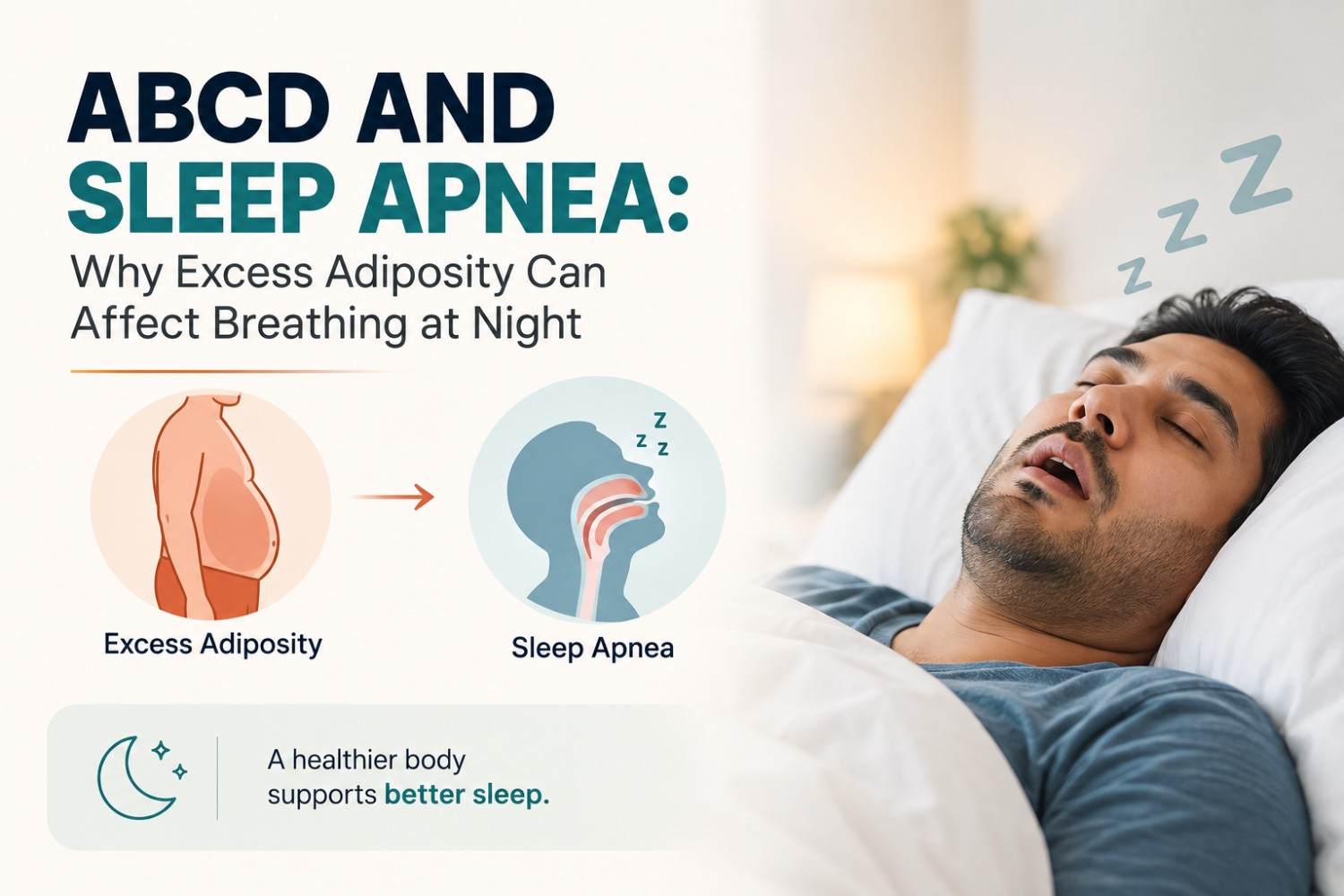
ABCD and Sleep Apnea: Why Excess Adiposity Can Affect Breathing at Night is an important question because adiposity-based chronic disease is assessed by health impact, not body size alone.
ABCD and Sleep Apnea: How Breathing Problems at Night Connect to Metabolic Disease
Sleep apnea, repeated pauses or shallow breathing during sleep, is often treated as an isolated sleep disorder, something to fix mainly for the sake of better rest and daytime alertness. In reality, sleep apnea is closely intertwined with Adiposity-Based Chronic Disease, sharing mechanisms that worsen each other, and addressing one without the other often leaves meaningful risk unaddressed.
Why Excess Adiposity Increases Sleep Apnea Risk
Fat deposits around the neck and upper airway can physically narrow the space available for normal breathing during sleep, when muscle tone naturally relaxes. This is one of the most direct, mechanical connections between adiposity and sleep apnea, though sleep apnea can also occur in people without significant excess weight, particularly with certain anatomical factors.
How Sleep Apnea Worsens Metabolic Disease
Repeated drops in oxygen levels during sleep apnea episodes trigger stress hormone release and increase insulin resistance, independent of body weight itself. This means sleep apnea is not simply a downstream consequence of ABCD, it actively worsens the underlying insulin resistance driving ABCD, creating a reinforcing cycle where each condition makes the other more difficult to manage.
Common but Often Overlooked Symptoms
Loud snoring, witnessed pauses in breathing during sleep, gasping or choking sensations at night, morning headaches, and excessive daytime sleepiness despite seemingly adequate time in bed are all common sleep apnea symptoms that frequently go unrecognised or are attributed to unrelated causes, particularly when the person is not markedly overweight.
Why This Connection Matters for ABCD Staging
Sleep apnea is recognised as one of the complications considered when staging Adiposity-Based Chronic Disease, alongside conditions like insulin resistance, fatty liver disease, and hypertension. This is covered in more detail in our article on how ABCD differs from a BMI-based obesity diagnosis, since sleep apnea's presence reflects genuine disease activity, not simply excess weight in isolation.
Diagnosing Sleep Apnea
A sleep study, either conducted at a sleep lab or, in appropriate cases, at home with a portable monitoring device, is the standard way to diagnose sleep apnea and assess its severity. This should be considered for anyone with the symptoms above, particularly alongside other features of ABCD such as insulin resistance or hypertension.
Treatment Overlap Between Sleep Apnea and ABCD
Weight loss, particularly reduction of neck and upper body fat, can meaningfully improve or in some cases resolve mild to moderate sleep apnea, connecting directly to the broader ABCD treatment principles covered in our articles on diet for ABCD and exercise for ABCD patients. For moderate to severe sleep apnea, continuous positive airway pressure (CPAP) therapy remains an important direct treatment alongside these broader lifestyle interventions, not a replacement for them.
The Cardiovascular Stakes
Untreated sleep apnea is independently associated with increased risk of hypertension, cardiovascular disease, and stroke, risks that compound with the cardiometabolic risk already present in ABCD. This is part of why sleep apnea screening deserves specific attention in anyone being evaluated or treated for ABCD, rather than being addressed only if a patient happens to mention sleep problems separately.
Why Treating Both Together Produces Better Outcomes
Addressing sleep apnea, whether through CPAP, weight loss, or both together, can improve insulin sensitivity and blood pressure beyond what would be expected from weight loss alone, since untreated sleep apnea itself actively drives insulin resistance independent of body weight. This is a strong argument for evaluating sleep alongside standard metabolic testing rather than treating sleep apnea as a separate, unrelated condition.
A Practical Next Step
If you have symptoms suggesting sleep apnea, loud snoring, witnessed breathing pauses, or unexplained daytime fatigue, alongside any features of ABCD, discussing a sleep evaluation with your physician as part of your broader metabolic assessment is a reasonable and often valuable step, evaluated together at ABCD Health.
Get Evaluated for Sleep Apnea and ABCD
Frequently Asked Questions (FAQs)
1. Can sleep apnea occur in someone without significant excess weight?
Yes, anatomical factors and other causes can produce sleep apnea independent of body weight, though excess weight, particularly around the neck, is a significant contributing factor for many people.
2. Does treating sleep apnea alone improve insulin resistance?
It can contribute to improvement, particularly alongside weight management and other lifestyle changes, since untreated sleep apnea itself worsens insulin resistance independent of weight.
3. Is a home sleep study as reliable as a lab-based one?
For many patients, home sleep testing provides reliable results, though your physician will advise whether a lab-based study is more appropriate for your specific situation.
4. Can weight loss alone cure sleep apnea?
For mild to moderate cases, meaningful weight loss can significantly improve or resolve sleep apnea, though moderate to severe cases often still require CPAP therapy alongside weight management.
5. Why does sleep apnea increase blood pressure?
Repeated oxygen drops and stress hormone release during apnea episodes place ongoing strain on the cardiovascular system, contributing to elevated blood pressure over time.
6. Should everyone with ABCD be screened for sleep apnea?
Given the strong bidirectional relationship, screening for sleep apnea symptoms is a reasonable part of a thorough ABCD evaluation, particularly for those with typical symptoms.
7. Can children or younger adults have this same connection between weight and sleep apnea?
Yes, similar mechanisms can apply, and paediatric sleep apnea is a distinct area of concern, evaluated somewhat differently but conceptually related to the adult pattern described here.
This article is for educational purposes and does not replace personalized medical advice. Please consult a qualified physician before making changes to your treatment, medication, or health screening plan.