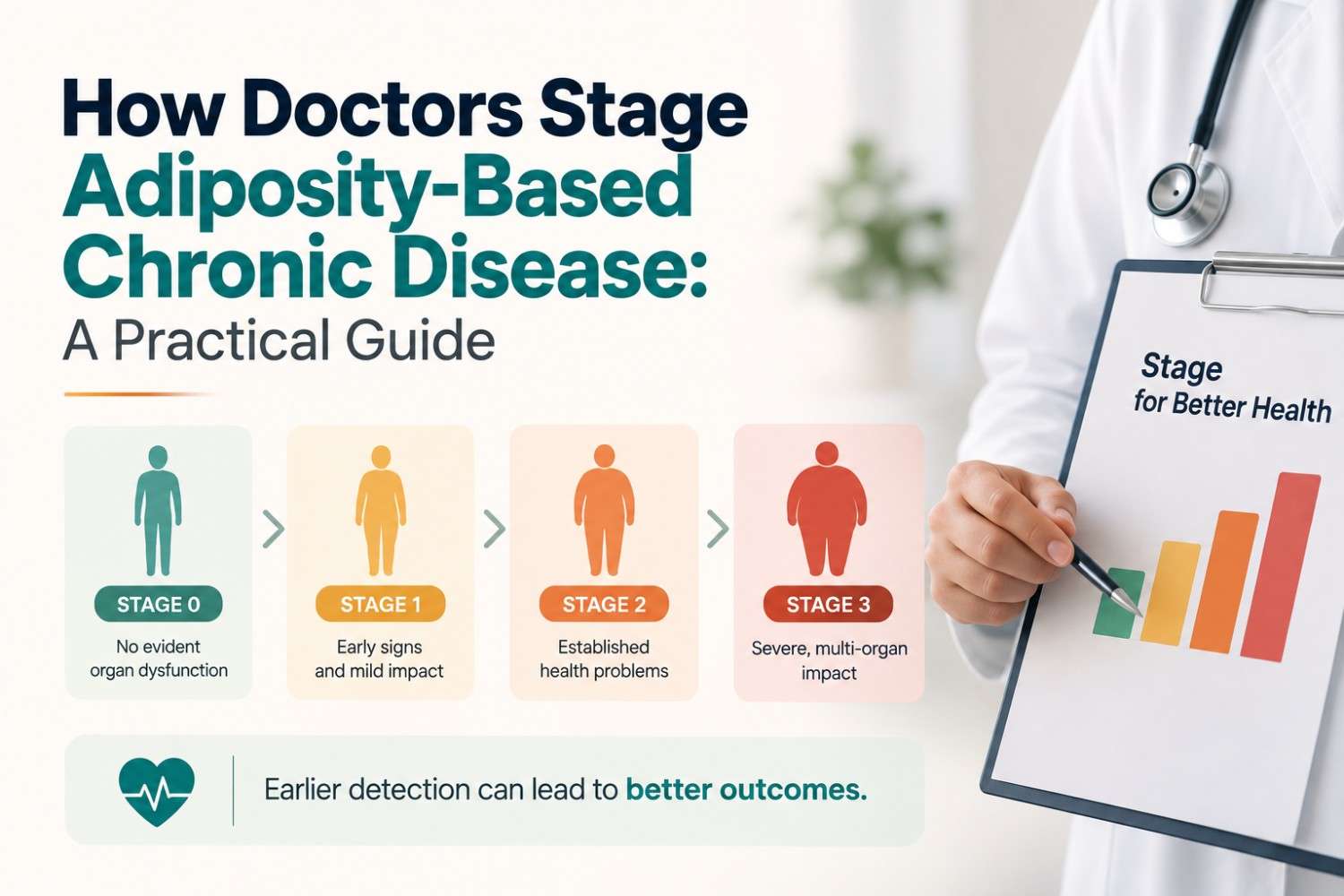
How Doctors Stage Adiposity-Based Chronic Disease: A Practical Guide is an important question because adiposity-based chronic disease is assessed by health impact, not body size alone.
How Doctors Stage Adiposity-Based Chronic Disease
Unlike a simple obesity diagnosis based on a single BMI cutoff, Adiposity-Based Chronic Disease uses a staging system that reflects both the presence of excess or abnormally distributed fat and the actual complications it has caused. Understanding how this staging works clarifies why two people with an identical BMI can receive very different diagnoses and treatment recommendations.
The Two Components of ABCD Assessment
ABCD staging is built on two separate but related assessments: confirming the presence of excess or abnormally distributed adiposity, using BMI alongside waist circumference and, where available, body composition, and separately evaluating whether that adiposity has produced measurable complications, ranging from insulin resistance to established conditions like type 2 diabetes, fatty liver disease, hypertension, or sleep apnea.
Stage 0: Adiposity Without Complications
At this stage, excess adiposity is present based on BMI or waist circumference, but no metabolic complications have been identified on testing, normal fasting insulin, blood pressure, and lipid profile. This stage still warrants monitoring and preventive lifestyle guidance, since the underlying adiposity carries future risk even without current complications.
Stage 1: Early Metabolic Changes
This stage reflects early evidence of metabolic dysfunction, elevated fasting insulin or HOMA-IR, mildly elevated triglycerides, or early blood pressure changes, without yet meeting formal diagnostic criteria for a named condition like diabetes or hypertension. Stage 1 represents a genuinely important window for intervention, since changes at this stage are often more responsive to lifestyle treatment than once a named complication has fully developed.
Stage 2: Established Complications
At Stage 2, one or more established, diagnosed complications are present, type 2 diabetes, hypertension, dyslipidemia, fatty liver disease, sleep apnea, or PCOS, among others. Treatment at this stage typically requires more active medical management alongside lifestyle intervention, rather than lifestyle changes alone.
Stage 3: Severe Complications
This most advanced stage reflects severe, often organ-threatening complications, such as advanced cardiovascular disease, significant liver fibrosis, or severe uncontrolled diabetes with organ damage. Treatment at this stage is typically more intensive and may involve a broader specialist team beyond a single physician.
Why Staging, Not Just Diagnosis, Matters
This staging system allows treatment intensity to be matched to actual disease severity, rather than applying the same approach to everyone who meets a BMI-based obesity threshold. Someone at Stage 0 may need primarily preventive lifestyle counselling, while someone at Stage 2 or 3 needs more active, coordinated medical management, a distinction that a BMI-only diagnosis cannot capture, covered further in our article on how ABCD differs from obesity.
How Staging Is Actually Performed in Practice
A thorough ABCD evaluation typically includes BMI, waist circumference, blood pressure, a full lipid panel, fasting glucose and insulin, liver enzymes, and a review for symptoms or history suggesting sleep apnea or PCOS. Based on these results together, a physician determines the appropriate stage and, correspondingly, the intensity of treatment needed.
Staging Is Not Static
A person's ABCD stage can change over time, in either direction. Effective lifestyle intervention and, where appropriate, medication can move someone from a higher stage to a lower one, while unaddressed risk factors can allow progression to a higher stage. This is why periodic reassessment, not a single one-time evaluation, is part of proper ABCD management, evaluated on an ongoing basis at ABCD Health.
What This Means for Treatment Planning
Knowing your specific stage helps set realistic expectations for treatment intensity and monitoring frequency. Someone at Stage 1 might reasonably focus on structured lifestyle change with periodic monitoring, covered in our articles on diet for ABCD and exercise for ABCD patients, while someone at Stage 2 or beyond typically needs this alongside active medical management of their specific complications.
Frequently Asked Questions (FAQs)
1. Can someone move from a higher ABCD stage to a lower one?
Yes, with effective treatment and lifestyle change, staging can improve over time, reflecting genuine improvement in the underlying disease process.
2. Is ABCD staging the same everywhere, or does it vary by clinic?
The general framework, developed by the American Association of Clinical Endocrinology, is fairly standardised, though specific testing panels used to assess staging can vary somewhat between clinical practices.
3. How often should ABCD staging be reassessed?
Annually is reasonable for most people, with more frequent reassessment for those actively undergoing treatment for identified complications.
4. Can someone at Stage 0 skip regular monitoring?
No, Stage 0 still reflects meaningful future risk and benefits from periodic monitoring and preventive lifestyle guidance rather than being considered risk-free.
5. Does ABCD staging require special or expensive testing?
Most of the required testing, waist circumference, blood pressure, standard blood work, is widely available and not significantly more expensive than a standard health checkup.
6. Is medication always needed at Stage 2 or above?
Not always, but active medical management, which may include medication, is more commonly needed at these stages compared to Stage 0 or 1.
7. Can two people with the same BMI have different ABCD stages?
Yes, this is precisely the point of the staging system, since it is based on actual metabolic complications present, not BMI alone.
This article is for educational purposes and does not replace personalized medical advice. Please consult a qualified physician before making changes to your treatment, medication, or health screening plan.