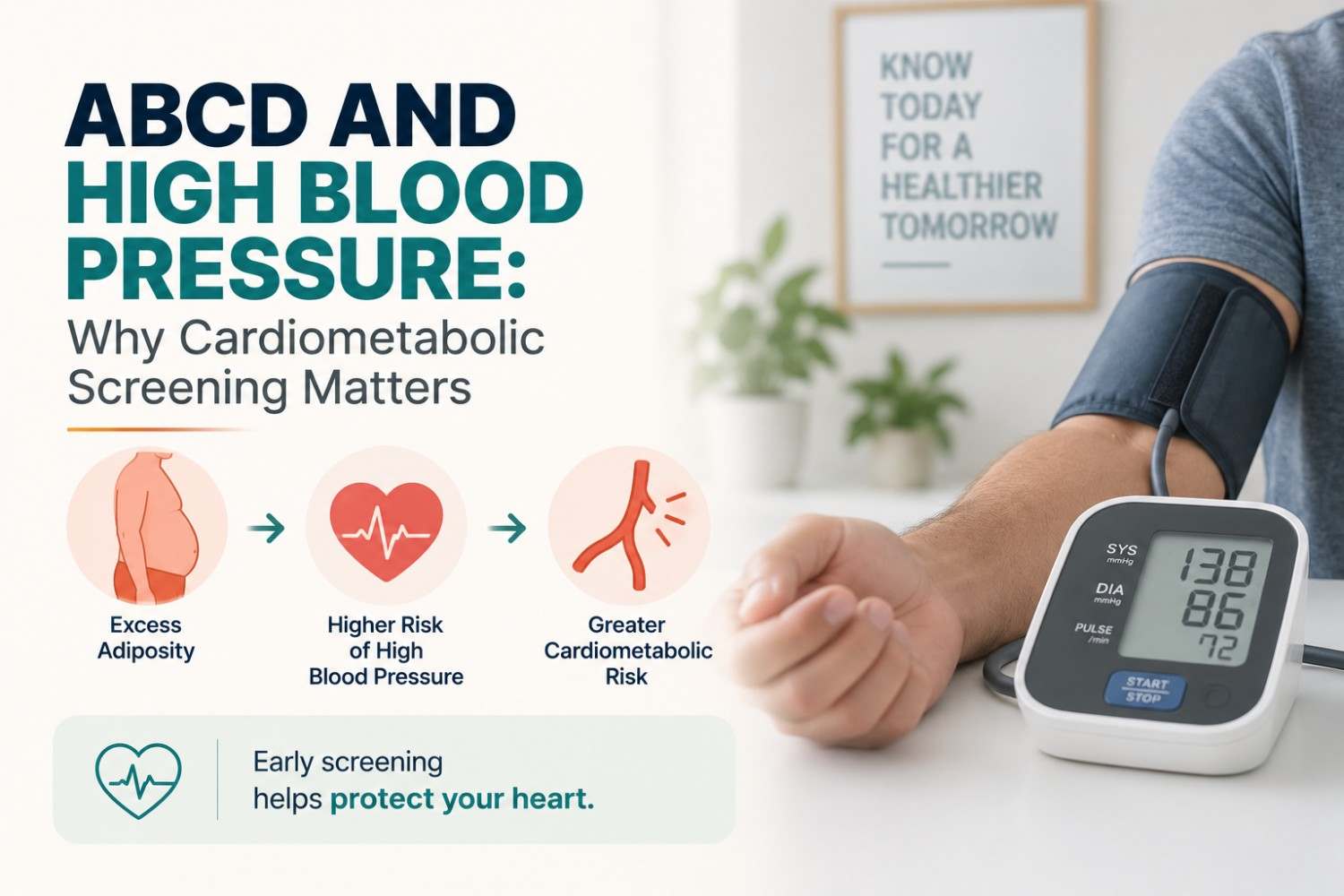
ABCD and High Blood Pressure: Why Cardiometabolic Screening Matters is an important question because adiposity-based chronic disease is assessed by health impact, not body size alone.
ABCD and High Blood Pressure: Why Screening Matters More Than You'd Think
Hypertension and Adiposity-Based Chronic Disease are closely intertwined, sharing insulin resistance and fat tissue dysfunction as common underlying mechanisms rather than existing as two separate, coincidentally co-occurring conditions. Regular blood pressure screening, alongside the other markers used in ABCD assessment, catches a condition that is frequently silent until it has already caused significant harm.
How Insulin Resistance Raises Blood Pressure
Elevated insulin affects blood vessel function directly, promoting sodium retention by the kidneys and affecting the balance of substances that constrict and relax blood vessels, contributing to elevated blood pressure independent of body weight itself. This mechanism connects hypertension directly to the insulin resistance pathway covered in our article on insulin resistance symptoms, rather than treating high blood pressure as an unrelated, separate condition.
Why Visceral Fat Specifically Matters
Visceral fat, more than overall body weight, is particularly strongly associated with elevated blood pressure, since it is more metabolically active and produces more inflammatory signalling that affects vascular function. This is part of why waist circumference, not just BMI, is considered when assessing cardiovascular risk alongside blood pressure in ABCD evaluation.
Why Hypertension Is Often Called a "Silent" Condition
High blood pressure typically causes no noticeable symptoms until it has already contributed to significant organ damage, affecting the heart, kidneys, blood vessels, or eyes. This silent progression is precisely why regular screening matters, rather than waiting for symptoms that often only appear once meaningful damage has already occurred.
Blood Pressure as Part of ABCD Staging
Elevated blood pressure is one of the complications considered when staging ABCD, contributing to a higher stage classification when present alongside other metabolic dysfunction, covered in more detail in our article on how doctors stage ABCD. Its presence indicates active disease process, not simply an isolated, unrelated cardiovascular risk factor.
How Often Blood Pressure Should Be Checked
For adults with known ABCD or its risk factors, blood pressure should be checked at every clinical visit, more frequently than the general population might require, given the elevated baseline risk. Home blood pressure monitoring can also provide valuable additional data between clinical visits, particularly for those with borderline or previously elevated readings.
Treatment Overlap Between Hypertension and ABCD
Weight loss, particularly reduction of visceral fat, and improved insulin sensitivity through diet and exercise can meaningfully lower blood pressure, sometimes sufficiently to reduce or eliminate the need for blood pressure medication in earlier-stage disease. Our articles on diet for ABCD and exercise for ABCD patients cover interventions directly relevant to blood pressure management alongside broader metabolic health.
When Medication Is Still Necessary
For more significantly elevated blood pressure, or when lifestyle changes alone have not achieved adequate control, blood pressure medication remains an important part of treatment, working alongside, not instead of, the lifestyle interventions addressing the underlying insulin resistance and adiposity. Discontinuing or reducing medication should only ever be done under medical supervision, based on sustained, confirmed improvement, not based on a single favourable reading.
The Cardiovascular Stakes of Untreated Hypertension
Sustained, untreated high blood pressure significantly increases the risk of heart attack, stroke, kidney disease, and other serious complications over time. Given its silent nature, regular screening as part of comprehensive ABCD care is one of the most important, low-cost interventions available for reducing this long-term risk, an approach used throughout evaluation at ABCD Health.
Get Your Blood Pressure and Metabolic Health Assessed
Frequently Asked Questions (FAQs)
1. Can blood pressure be elevated even without any symptoms?
Yes, this is the norm rather than the exception; hypertension is frequently entirely asymptomatic until significant organ damage has already occurred.
2. How often should blood pressure be checked if I have ABCD risk factors?
At every clinical visit at minimum, with home monitoring providing valuable additional data between visits, particularly for borderline readings.
3. Can weight loss alone normalise blood pressure?
For many people at earlier stages, meaningful weight loss and improved insulin sensitivity can significantly lower blood pressure, sometimes sufficiently to reduce medication needs, though this should be assessed individually.
4. Is home blood pressure monitoring accurate enough to rely on?
Yes, with a properly validated device and correct technique, home monitoring provides reliable data that complements clinical readings well.
5. Should blood pressure medication be stopped once weight loss is achieved?
Only under medical supervision, based on sustained, confirmed blood pressure improvement over time, not based on a single favourable reading or the achievement of a weight goal alone.
6. Does visceral fat matter more than overall weight for blood pressure risk?
Visceral fat is particularly strongly associated with blood pressure risk, which is why waist circumference is considered alongside BMI in a thorough evaluation.
7. Can untreated high blood pressure be reversed once organ damage has occurred?
Some damage may be permanent, which is exactly why early detection and treatment, before significant organ damage occurs, matters so much.
This article is for educational purposes and does not replace personalized medical advice. Please consult a qualified physician before making changes to your treatment, medication, or health screening plan.