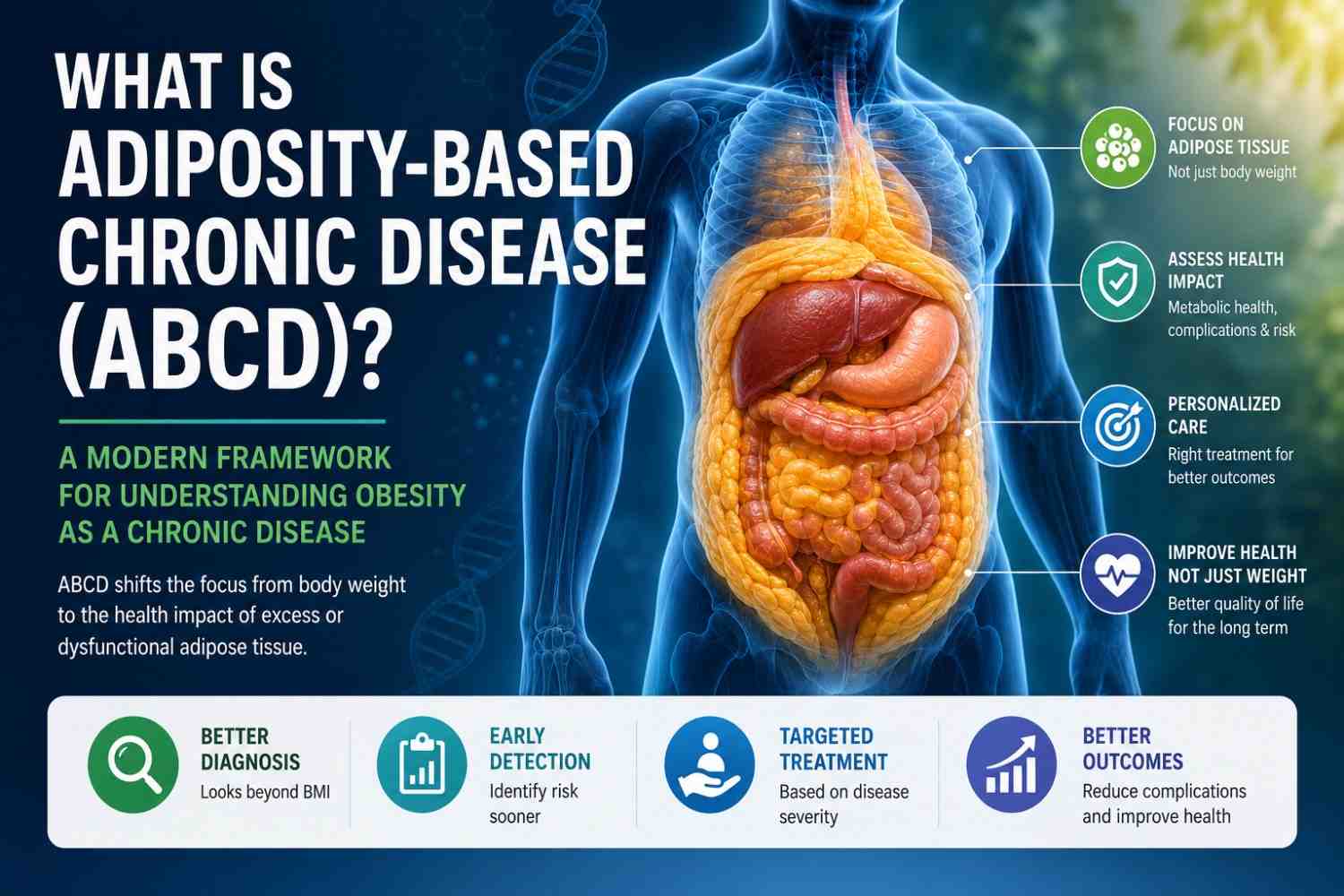
Learn everything about Adiposity-Based Chronic Disease (ABCD), including its definition, stages, diagnosis, complications, treatment, and why it is changing the way obesity is understood.
What Is Adiposity Based Chronic Disease (ABCD)? The Complete Evidence Based Guide
Last Updated: July 2026 • Reading Time: 28 Minutes • Medically Reviewed: Dr. Ashish Kalla
Table of Contents
Quick Definition
Adiposity Based Chronic Disease is a modern medical framework that redefines obesity. Instead of viewing it merely as a matter of excess weight, ABCD classifies it as a chronic disease driven by the presence of excess or dysfunctional adipose tissue. By shifting the focus away from the traditional Body Mass Index, ABCD evaluates how fat is distributed, overall metabolic health, and specific obesity related complications to provide a highly accurate risk assessment.
Key Takeaways
ABCD treats obesity as an ongoing chronic disease rather than a simple metric of excess weight.
BMI on its own is an incomplete tool that cannot accurately reflect internal metabolic health.
Healthy fat tissue protects the body, whereas dysfunctional fat tissue actively drives chronic disease.
Visceral fat poses a significantly higher danger than subcutaneous fat.
Contemporary obesity treatments prioritize healing metabolic function rather than just focusing on the scale.
Implementing the ABCD framework allows for earlier detection, highly personalized treatments, and vastly improved long term health outcomes.
What Is Adiposity Based Chronic Disease?
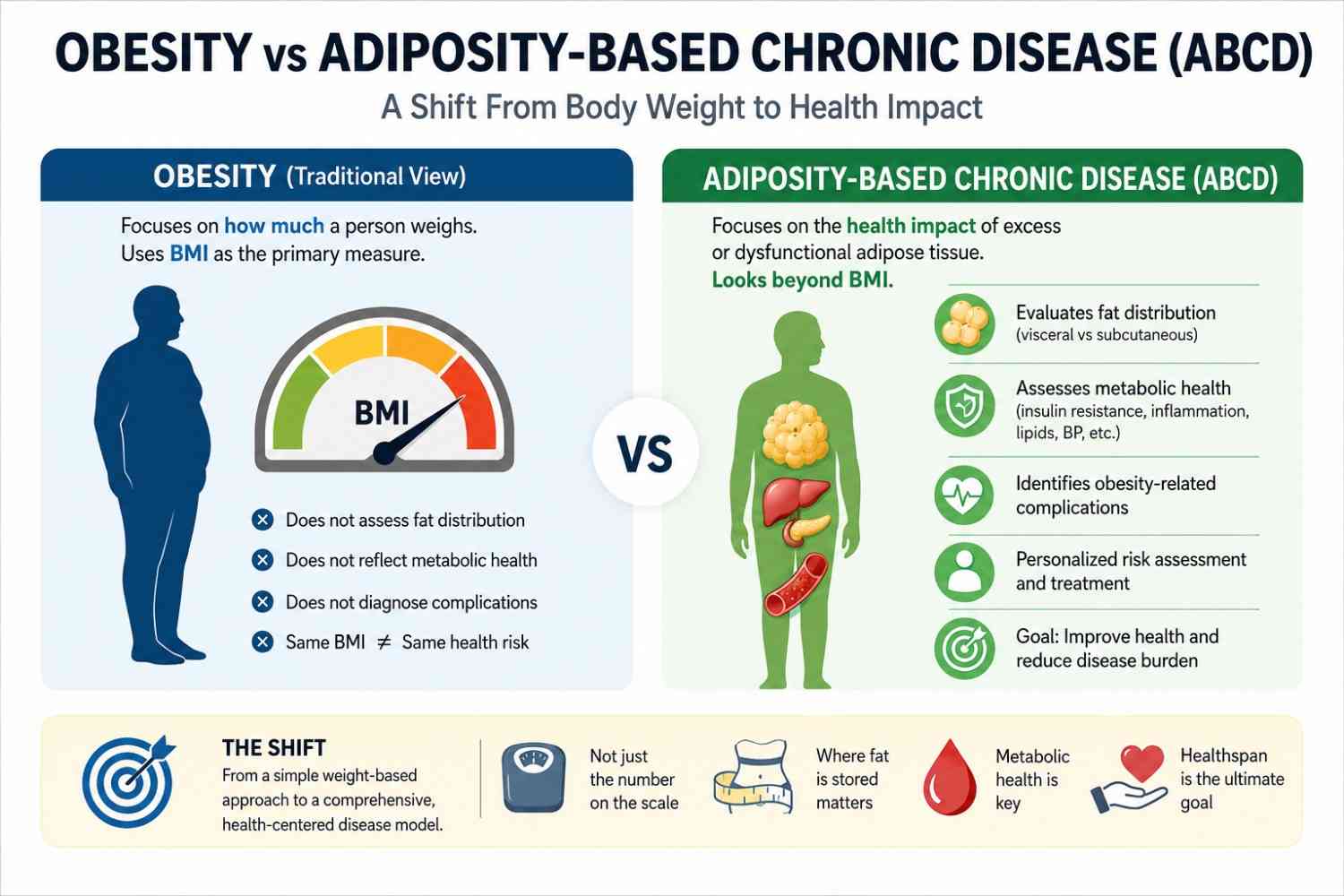
Historically, the medical community relied almost entirely on Body Mass Index to classify obesity. While this basic calculation of height and weight is helpful for observing broad population trends, it falls short on an individual level. BMI cannot tell a doctor where fat is stored, how metabolically active it is, or whether it is silently damaging internal organs.
Recognizing these massive blind spots, leading endocrinologists and obesity researchers developed the ABCD model. Instead of asking how much a patient weighs, the ABCD framework asks a much more clinically valuable question regarding how body fat actively impacts health.
This simple shift changes everything about how obesity is managed. The ABCD model acknowledges obesity as a highly complex disease intertwined with hormonal regulation, metabolic function, inflammation, and cardiovascular health. Excess or poorly functioning adipose tissue directly feeds into complications like type 2 diabetes, hypertension, sleep apnea, fatty liver disease, and osteoarthritis.
Why Was the ABCD Framework Created?
Medical science is constantly evolving. A few decades ago, society and many medical professionals viewed obesity as a cosmetic failure or a simple lack of willpower regarding calorie consumption. Today, the scientific consensus recognizes that obesity is driven by genetics, gut microbiomes, environmental triggers, and the biological behavior of fat cells themselves.
Doctors realized that two patients could step on a scale, share the exact same BMI, and have completely opposite health profiles. One might boast perfect blood pressure and zero insulin resistance, while the other is standing on the precipice of cardiovascular disease. The ABCD framework was established to capture these critical biological nuances, ensuring patients get diagnosed based on actual disease markers rather than just their clothing size.
Understanding Adipose Tissue
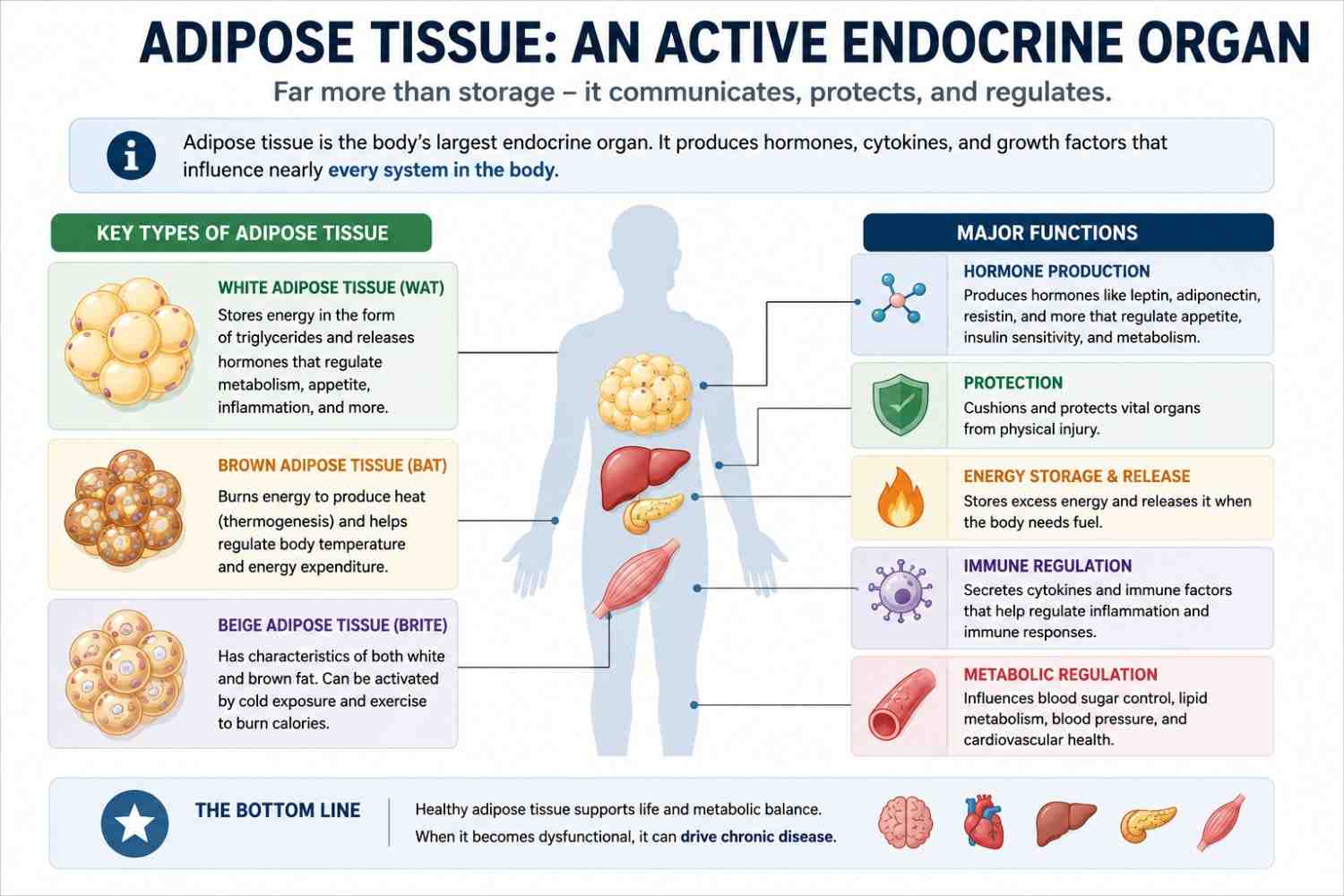
A common misconception is that body fat is just a passive storage locker for extra calories. In reality, discovering the science of adipose tissue reveals that it functions as one of the largest endocrine organs in the human body. It is constantly sending signals to the brain, liver, muscles, and immune system.
When healthy, adipose tissue performs vital tasks like storing energy safely, producing necessary hormones, insulating organs, and regulating body temperature. Humans simply could not survive without it. The health risks begin when this tissue becomes inflamed, enlarged, and entirely dysfunctional.
Types of Adipose Tissue
Not all body fat is created equal. Researchers classify adipose tissue into distinct types based on their specific biological jobs:
White Adipose Tissue: The most common type of fat. It stores excess energy and produces hormones that dictate appetite and insulin sensitivity.
Brown Adipose Tissue: This fat is remarkably different. Instead of storing calories, brown fat burns them to generate heat. It is packed with mitochondria, which gives it a darker color.
Beige Adipose Tissue: Sharing traits of both white and brown fat, beige fat can behave like brown fat under specific conditions like extreme cold exposure or rigorous exercise.
Healthy Fat vs Sick Fat
It is crucial to understand that not all body fat is harmful. The real danger lies in adiposopathy, a medical term often referred to as sick fat.
FeatureHealthy Adipose TissueDysfunctional Adipose TissueStorage LocationStores energy safely under the skinStores excess fat tightly around vital internal organsHormone ProductionProduces balanced and healthy hormonesCreates severe hormonal imbalancesMetabolic ImpactSupports natural insulin sensitivityActively promotes severe insulin resistanceInflammatory ResponseMaintains extremely low inflammationDrives chronic and systemic inflammationOverall FunctionMaintains long term metabolic healthCauses widespread metabolic dysfunction
The shift from healthy to sick fat is a slow burn. Years of sedentary behavior, chronic stress, poor sleep, and genetic factors push adipose tissue past its breaking point. Because fat acts as an endocrine organ, dysfunctional fat creates severe hormonal imbalances involving leptin and adiponectin while pumping out inflammatory cytokines.
Why BMI Alone Is Not Enough
Body Mass Index has long been the default tool for identifying obesity. While it is incredibly cheap and easy for screening massive populations, understanding obesity diagnosis beyond BMI is critical because BMI strictly measures size and not actual health.
BMI has no way of knowing how much muscle mass you have, where your fat is located, or whether that fat is damaging your organs.
The Importance of Waist Circumference
Modern guidelines strongly urge doctors to measure the waistline of a patient alongside their BMI. A larger waist circumference heavily indicates visceral fat accumulation, which dramatically spikes the risk for type 2 diabetes, heart disease, stroke, and premature mortality.
Many researchers now believe that analyzing BMI vs waist to height ratio proves that waist measurements predict metabolic risk much more accurately. A highly effective rule of thumb is to keep your waist circumference to less than half of your total height.
Visceral Fat vs Subcutaneous Fat
Where your body chooses to store fat matters immensely more than how much fat you carry. Subcutaneous fat is located just beneath the surface of the skin and provides physical insulation and energy storage with a much lower metabolic risk.
Visceral fat is packed deeply around internal organs like the liver, intestines, and heart. It is highly metabolically active and aggressive. Visceral fat dramatically increases the risk of heart disease and diabetes because it constantly pumps out chronic inflammatory cytokines.
How ABCD Is Diagnosed
You cannot diagnose ABCD with a single blood test. Healthcare providers must look at the full clinical picture to determine if your fat tissue is making you sick. A thorough ABCD assessment includes detailed medical and family history, waist circumference, blood pressure readings, fasting blood glucose tests, comprehensive lipid profiles, and liver function evaluations.
The Four Stages of ABCD
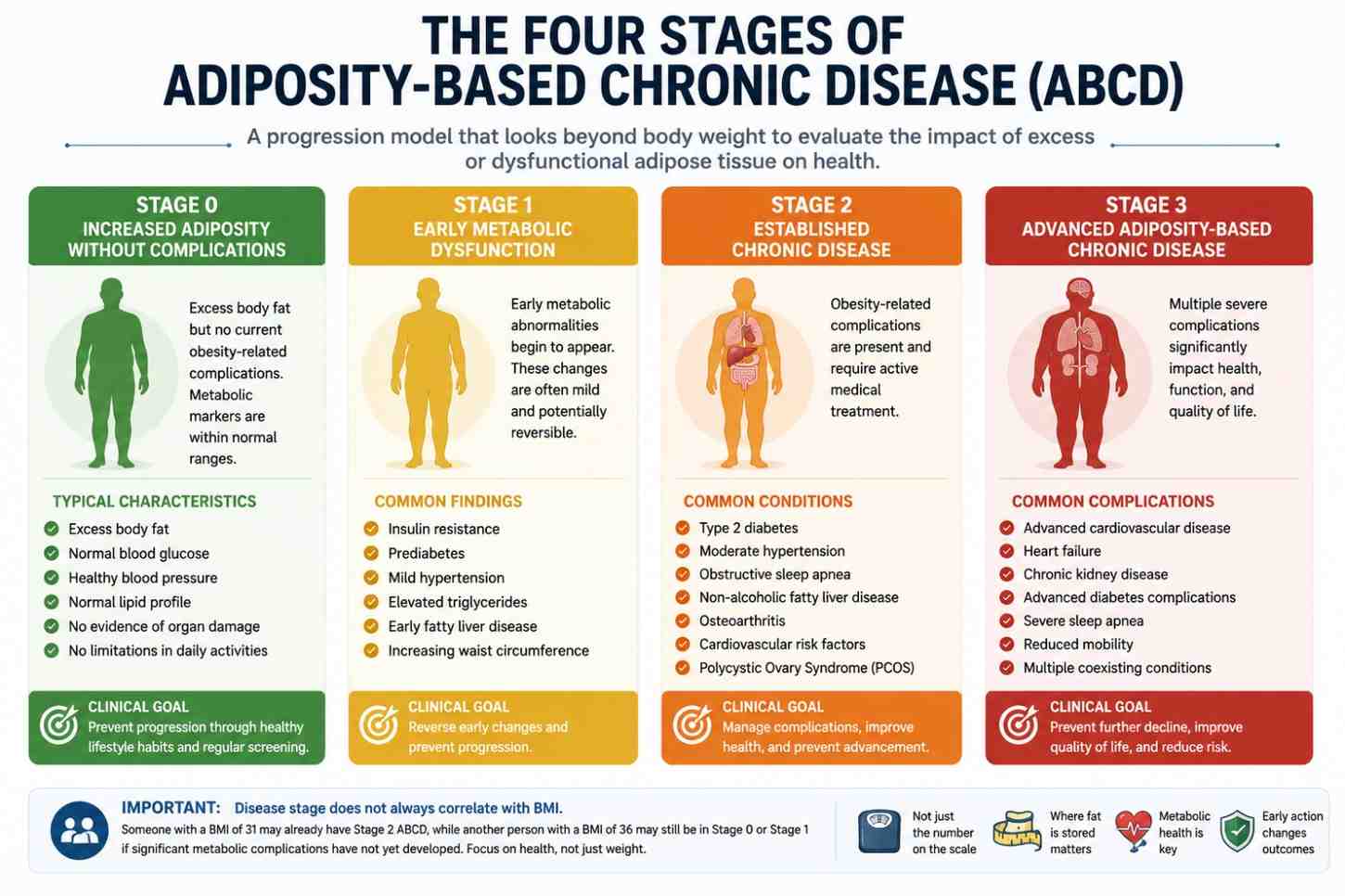
The true brilliance of the ABCD framework is that it treats obesity as a progressive timeline. Evaluating the stages of ABCD ensures patients get the exact level of care they need based on their disease severity.
Stage 0: The patient carries excess fat, but blood pressure, cholesterol, and blood sugar remain perfectly normal. There is no current organ damage, but preventive lifestyle habits are heavily encouraged.
Stage 1: Warning signs begin to flash. The patient may show prediabetes, mild hypertension, elevated triglycerides, or early signs of a fatty liver. Intervention here can entirely reverse the damage.
Stage 2: The complications are now clinically significant. The patient likely requires structured medical treatments for issues like type 2 diabetes, moderate hypertension, sleep apnea, or polycystic ovary syndrome.
Stage 3: Severe complications have taken root, such as heart failure, chronic kidney disease, severe mobility issues, or advanced diabetes. Management requires a multidisciplinary medical team.
How ABCD Affects the Body
When sick fat takes over, no system in the body is spared. Recognizing early insulin resistance symptoms is vital because dysfunctional fat blocks insulin signals. The pancreas works overtime until it burns out, resulting in chronic high blood sugar and eventually type 2 diabetes.
Visceral fat also triggers systemic inflammation and damages blood vessels. This often leads to a cluster of dangerous conditions, making it crucial to monitor metabolic syndrome symptoms to prevent heart attacks and strokes. Excess fat can also infiltrate liver cells, potentially progressing into irreversible cirrhosis if ignored.
Evidence Based Treatment for ABCD
The primary goal of ABCD treatment is not necessarily reaching a specific number on the scale. The focus is entirely on rescuing metabolic health, reversing organ damage, and improving daily quality of life.
Lifestyle Interventions: Adopting sustainable nutrition using whole grains, lean proteins, and healthy fats rather than crash dieting. Aim for 150 to 300 minutes of moderate exercise a week.
Medical Nutrition Therapy: Working with a registered dietitian to create an eating plan tailored to specific metabolic markers and cultural preferences.
Behavioral Therapy: Addressing the mental side of health by optimizing sleep, managing stress, and practicing mindful eating habits.
Prescription Medications: Modern anti obesity medications can help correct appetite hormones, improve satiety, and regulate blood glucose when lifestyle changes are not enough.
Metabolic Surgery: For advanced patients, bariatric procedures can forcefully reset the metabolic system and often put diabetes into remission.
Can Adiposity Based Chronic Disease Be Prevented?
While you cannot change your genetics, you have massive control over environmental and lifestyle triggers. Prevention is infinitely easier than reversing advanced organ damage. Stay physically active throughout your entire life, prioritize whole and unprocessed foods, and fiercely protect your sleep schedule. Keep a close eye on your waist circumference as you age and never skip routine metabolic blood panels with your doctor.
Frequently Asked Questions
What exactly is Adiposity Based Chronic Disease?
It is a modernized medical diagnosis that views obesity as a chronic illness caused by the dysfunction of fat tissue rather than just looking at how much a person weighs.
Is ABCD just a new name for obesity?
Not exactly. While they are related, ABCD shifts the clinical focus away from the scale and zeroes in on the biological damage and complications caused by the fat tissue.
Why are doctors moving away from BMI?
BMI is blind to what is happening inside your body. A bodybuilder and a metabolically sick patient can have the exact same BMI. It completely ignores muscle mass and internal visceral fat.
What does the term adiposopathy mean?
In plain terms, it means sick fat. It is what happens when fat cells stop functioning normally and start pumping out harmful inflammatory signals instead.
Can I have ABCD even if I am skinny?
Yes. You can have a perfectly normal weight on the outside but carry dangerous amounts of visceral fat around your internal organs on the inside, leading to severe metabolic issues.