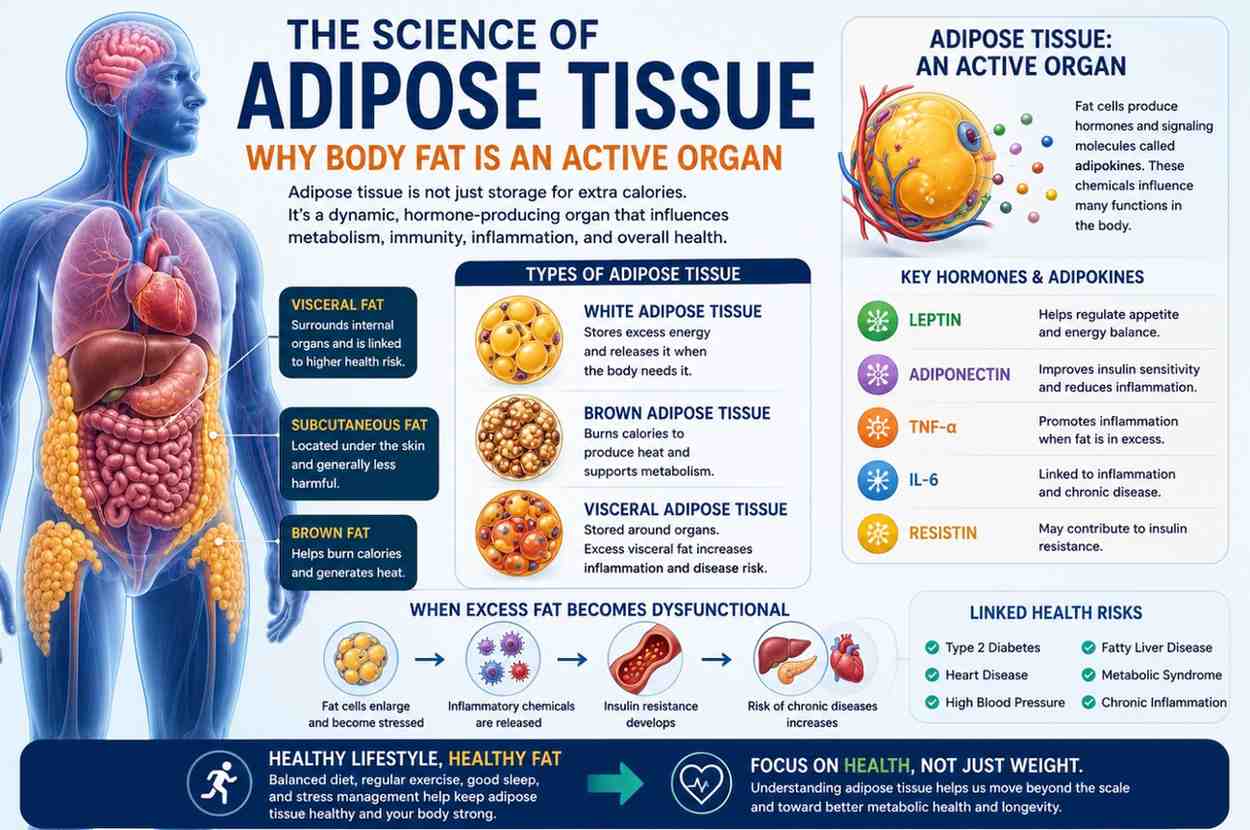
Discover why adipose tissue is considered an active organ, how it regulates metabolism and hormones, and why it plays a central role in Adiposity-Based Chronic Disease.
The Science of Adipose Tissue: Why Body Fat Is an Active Organ
For many years, body fat was viewed as nothing more than stored energy. If someone gained weight, the explanation seemed simple—they had accumulated excess fat. However, modern medical research has dramatically changed this understanding. Scientists now recognize that adipose tissue is a highly active organ that communicates with nearly every system in the body. It produces hormones, regulates metabolism, influences inflammation, and plays a major role in the development of chronic diseases.
This shift in understanding has also influenced how obesity is diagnosed and treated. Instead of focusing only on body weight or Body Mass Index (BMI), healthcare professionals increasingly evaluate how adipose tissue affects overall health. This forms the foundation of the Adiposity-Based Chronic Disease (ABCD) framework, which views obesity as a chronic disease driven by dysfunctional body fat rather than excess weight alone.
What Is Adipose Tissue?
Adipose tissue is the medical term for body fat. While it does store excess energy for future use, that is only one of its many responsibilities. Healthy adipose tissue helps regulate body temperature, cushions internal organs, stores essential nutrients, and supports hormone production.
Rather than acting as an inactive storage site, adipose tissue functions much like other organs in the body. It constantly communicates with the brain, liver, muscles, pancreas, and immune system to maintain metabolic balance.
Understanding this concept is important because many obesity-related diseases develop when adipose tissue becomes dysfunctional rather than simply increasing in size.
Different Types of Body Fat
Not all body fat behaves the same way. Researchers generally classify adipose tissue into several types, each with different functions.
White Adipose Tissue
White adipose tissue is the body's primary energy storage system. It stores excess calories and releases energy when needed. Most of the visible fat around the abdomen, hips, and thighs belongs to this category.
Brown Adipose Tissue
Brown fat helps generate heat instead of storing energy. It contains large numbers of mitochondria, allowing it to burn calories to maintain body temperature. Although adults have smaller amounts of brown fat than infants, it continues to play an important metabolic role.
Visceral Fat
Visceral fat surrounds organs such as the liver, pancreas, and intestines. Unlike fat stored under the skin, visceral fat actively releases inflammatory chemicals that increase the risk of insulin resistance, cardiovascular disease, fatty liver disease, and type 2 diabetes.
This explains why doctors increasingly measure waist circumference alongside BMI. If you'd like to understand why BMI alone is often insufficient, read our guide on Obesity Diagnosis Beyond BMI.
Adipose Tissue Works Like an Endocrine Organ
One of the biggest discoveries in obesity research is that adipose tissue behaves like an endocrine organ. This means it produces hormones and signaling molecules known as adipokines.
These chemical messengers influence numerous biological processes including:
Appetite regulation
Energy balance
Blood sugar control
Inflammation
Immune function
Blood pressure regulation
When adipose tissue is healthy, these signals help maintain metabolic balance. However, excessive or dysfunctional adipose tissue begins producing abnormal amounts of these hormones, leading to widespread metabolic disturbances.
The Hormones Produced by Fat Cells
Several important hormones originate from adipose tissue.
Leptin
Leptin tells the brain when enough energy has been stored and helps regulate appetite. In many individuals with obesity, leptin levels become elevated, but the brain stops responding effectively—a condition known as leptin resistance.
Adiponectin
Adiponectin improves insulin sensitivity and reduces inflammation. Ironically, as body fat increases, adiponectin levels often decrease, contributing to metabolic disease.
Inflammatory Cytokines
Excess adipose tissue also releases inflammatory proteins such as TNF-alpha and interleukin-6. Persistent production of these molecules creates chronic low-grade inflammation throughout the body.
Unlike short-term inflammation that helps fight infections, chronic inflammation quietly damages tissues over many years and contributes to cardiovascular disease, diabetes, and metabolic syndrome.
When Healthy Fat Becomes Harmful
Body fat itself is not harmful. Problems begin when adipose tissue becomes overloaded and loses its ability to function normally.
As fat cells enlarge, they become less efficient at storing energy. Excess fat begins accumulating around organs, inflammatory activity increases, and insulin sensitivity declines.
This chain of events contributes to several chronic diseases, including:
Insulin resistance
Type 2 diabetes
High blood pressure
Fatty liver disease
Metabolic syndrome
Cardiovascular disease
Our article on Insulin Resistance Symptoms explains one of the earliest consequences of dysfunctional adipose tissue, while Metabolic Syndrome Symptoms explores how multiple metabolic abnormalities develop together.
Why Fat Distribution Matters More Than Total Body Fat
One of the biggest reasons modern obesity care has changed is that where fat is stored often matters more than how much fat a person has. Two individuals may have similar body weight or BMI, yet one may have significantly higher health risks because of excess visceral fat.
Visceral fat surrounds organs such as the liver, pancreas, and intestines. As it grows, it continuously releases inflammatory chemicals and free fatty acids into the bloodstream, increasing the risk of metabolic diseases.
By contrast, subcutaneous fat—the fat stored just beneath the skin—is generally less metabolically harmful. This distinction explains why modern clinical guidelines recommend assessing waist circumference and waist-to-height ratio in addition to BMI.
If you would like to understand these measurements in greater detail, read our comparison of BMI vs Waist-to-Height Ratio.
Adipose Tissue and Adiposity-Based Chronic Disease
The growing understanding of adipose tissue has completely changed the way clinicians think about obesity. Instead of viewing obesity simply as excess weight, healthcare professionals now recognize that dysfunctional adipose tissue can actively drive chronic disease.
This concept forms the basis of the Adiposity-Based Chronic Disease (ABCD) framework. ABCD evaluates not only the quantity of body fat but also how that fat affects metabolic health, organ function, and long-term disease risk.
Rather than treating everyone with the same BMI equally, clinicians assess:
Body fat distribution
Insulin sensitivity
Metabolic complications
Cardiovascular risk
Disease severity
This approach allows earlier diagnosis and far more personalized treatment strategies.
Keeping Adipose Tissue Healthy
The goal is not to eliminate body fat. Healthy adipose tissue performs essential biological functions. The objective is to maintain adipose tissue that functions normally without causing chronic inflammation or metabolic dysfunction.
Evidence shows that the following lifestyle habits support healthier adipose tissue:
Following a balanced diet rich in whole foods
Regular aerobic and resistance exercise
Maintaining healthy sleep habits
Managing chronic stress
Reducing prolonged sedentary behavior
Monitoring metabolic health regularly
Individuals who already have insulin resistance may also benefit from understanding available treatment options. Our guide on Insulin Resistance Treatment explains both lifestyle and medical approaches.
Looking Beyond the Scale
Modern obesity research is gradually moving away from using weight as the only indicator of health. While body weight remains useful, it provides only a partial picture.
Today's clinicians increasingly evaluate metabolic function, adipose tissue behavior, fat distribution, inflammatory activity, and obesity-related complications before making treatment decisions.
This shift allows healthcare providers to identify high-risk individuals much earlier and intervene before irreversible complications develop.
Final Thoughts
The discovery that adipose tissue functions as an active endocrine organ has transformed our understanding of obesity. Body fat is no longer viewed as passive storage but as a dynamic tissue capable of influencing hormones, metabolism, inflammation, and chronic disease.
Recognizing the biological role of adipose tissue also explains why modern frameworks like Adiposity-Based Chronic Disease focus on metabolic health rather than body weight alone. By understanding how fat behaves—not simply how much exists—healthcare professionals can provide earlier diagnosis, better risk assessment, and more personalized treatment.
The future of obesity care is not about chasing a number on the scale. It is about improving the health and function of adipose tissue to reduce disease risk and support long-term metabolic wellness.
Frequently Asked Questions
1. What is adipose tissue?
Adipose tissue is the body's fat tissue. It stores energy, protects organs, regulates body temperature, and produces hormones that influence metabolism and overall health.
2. Why is adipose tissue considered an organ?
Adipose tissue produces hormones and signaling molecules that communicate with multiple organs, making it function similarly to an endocrine organ.
3. What is the difference between adipose tissue and body fat?
Body fat is the common term, while adipose tissue is the medical term describing the specialized tissue composed of fat cells that performs numerous biological functions.
4. Is all body fat unhealthy?
No. Healthy adipose tissue is essential for normal body function. Problems occur when excess or dysfunctional adipose tissue leads to chronic inflammation and metabolic disease.
5. How does adipose tissue contribute to diabetes?
Excess visceral fat releases inflammatory molecules that reduce insulin sensitivity, increasing the risk of insulin resistance and eventually type 2 diabetes.
6. Can unhealthy adipose tissue be improved?
Yes. Regular exercise, healthy nutrition, weight management, adequate sleep, and medical treatment when appropriate can improve adipose tissue function and metabolic health.
7. Why is adipose tissue important in the ABCD framework?
The ABCD framework focuses on how adipose tissue affects metabolic health and disease risk rather than simply measuring body weight. This provides a more accurate understanding of obesity and its complications.