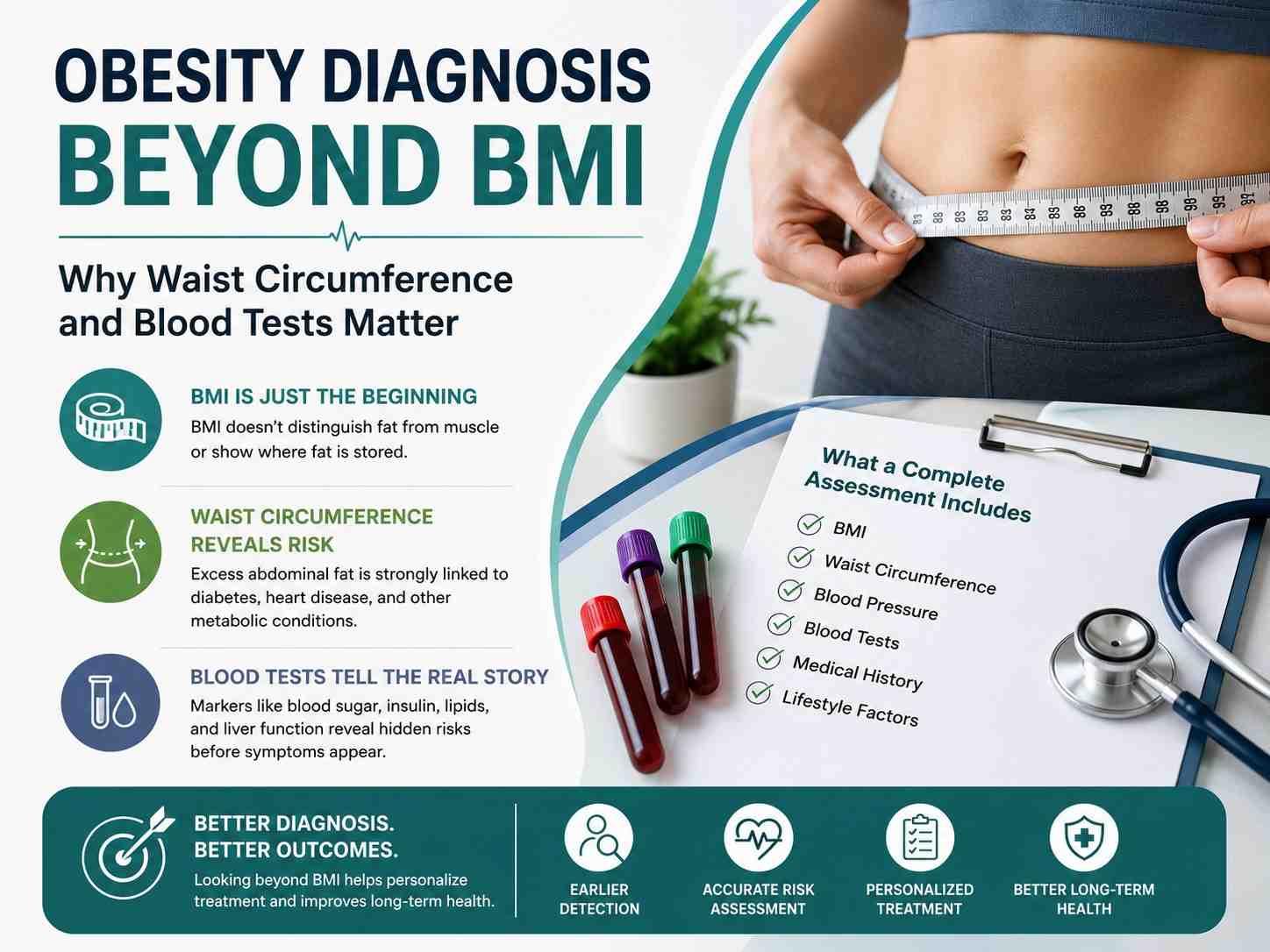
Learn why obesity diagnosis should go beyond BMI and how waist circumference and blood tests provide a more accurate picture of metabolic health.
Obesity Diagnosis Beyond BMI: Why Waist Circumference and Blood Tests Matter
For decades, Body Mass Index (BMI) has been the standard tool used to diagnose obesity. It is simple, quick, and widely accepted. But here’s the problem — it does not tell the full story. Many people are now realizing that obesity diagnosis beyond BMI is not just a trend, but a necessary shift in how we understand metabolic health.
Modern medical approaches are moving toward a more accurate system that considers fat distribution, metabolic markers, and real health risks. This means looking beyond weight and focusing on what is actually happening inside the body.
Why BMI Falls Short
BMI is calculated using height and weight, which makes it easy to use but limited in scope. It cannot differentiate between fat and muscle, nor can it indicate where fat is stored.
This leads to two major problems:
- People with high muscle mass may be incorrectly classified as overweight
- Individuals with normal weight but high body fat may be considered healthy
In reality, fat distribution — especially around the abdomen — plays a much bigger role in determining health risks. Learn more about why BMI alone is not enough.
Why Waist Circumference Is a Game Changer
Waist circumference is one of the simplest yet most powerful tools for assessing obesity-related risk. It directly measures abdominal fat, which is strongly linked to metabolic conditions.
Excess fat around the waist, often referred to as central obesity, is associated with:
- Insulin resistance
- Type 2 diabetes
- Cardiovascular disease
- Fatty liver disease
Unlike BMI, waist circumference gives insight into visceral fat — the type of fat that surrounds internal organs and drives many chronic diseases. You can also compare these measurements in BMI vs Waist-to-Height Ratio.
The Role of Blood Tests in Obesity Diagnosis
Numbers on a scale cannot reveal what is happening at a metabolic level. This is where blood tests become essential.
Key markers that help assess metabolic health include:
- Fasting blood glucose
- HbA1c (long-term blood sugar control)
- Fasting insulin levels
- Lipid profile (cholesterol and triglycerides)
- Liver function tests
These markers reveal early signs of metabolic dysfunction, often before symptoms appear. This allows for earlier intervention and better long-term outcomes. If blood tests indicate insulin resistance, read about common insulin resistance symptoms.
What Modern Diagnosis Looks Like
Today, diagnosing obesity is no longer about a single number. A more comprehensive approach includes:
- Body measurements like BMI and waist circumference
- Assessment of fat distribution
- Evaluation of metabolic markers through blood tests
- Screening for complications such as high blood pressure and insulin resistance
This multi-dimensional approach provides a clearer picture of a person’s health and risk level. It also aligns with the Adiposity-Based Chronic Disease (ABCD) model.
Hidden Obesity: The Silent Risk
One of the biggest reasons to move beyond BMI is the concept of hidden obesity. This refers to individuals who appear to have a normal weight but carry excess visceral fat.
These individuals may have:
- Normal BMI but high waist circumference
- Poor metabolic health despite looking fit
- Increased risk of diabetes and heart disease
Without additional measurements, these risks often go unnoticed until complications develop. This is one of the major differences explained in ABCD vs Traditional Obesity.
Why Early Detection Matters
Obesity-related conditions develop gradually. By the time symptoms appear, significant damage may already have occurred.
Using tools beyond BMI allows for:
- Earlier identification of risk factors
- Preventive interventions
- More effective treatment planning
- Reduced long-term complications
This proactive approach is key to managing obesity as a chronic disease.
How This Fits into Modern Frameworks
Newer medical frameworks like complication-centric care and Adiposity-Based Chronic Disease (ABCD) support the idea of going beyond BMI. They emphasize the importance of understanding how fat affects the body rather than simply measuring its quantity.
These concepts are also reflected in the AACE obesity guidelines and the comparison between AACE vs ABCD.
What You Should Focus on Instead
If you are assessing your own health, relying only on weight can be misleading. A better approach includes:
- Measuring your waist circumference regularly
- Monitoring blood sugar and lipid levels
- Paying attention to energy levels and metabolic symptoms
- Consulting a healthcare professional for a full evaluation
If insulin resistance has already been identified, learn about treatment options for insulin resistance.
Related Articles
- Why BMI Is Not Enough
- BMI vs Waist-to-Height Ratio
- What is Adiposity-Based Chronic Disease?
- ABCD vs Traditional Obesity
- Insulin Resistance Symptoms
- Insulin Resistance Treatment
- AACE Obesity Guidelines Explained
- AACE vs ABCD
Final Insight
The shift toward obesity diagnosis beyond BMI represents a major improvement in healthcare. It recognizes that health is not defined by weight alone but by how the body functions.
By including waist circumference and blood tests, clinicians can detect risks earlier, personalize treatment, and improve long-term outcomes.
In the end, it is not just about how much you weigh — it is about how healthy your body truly is.