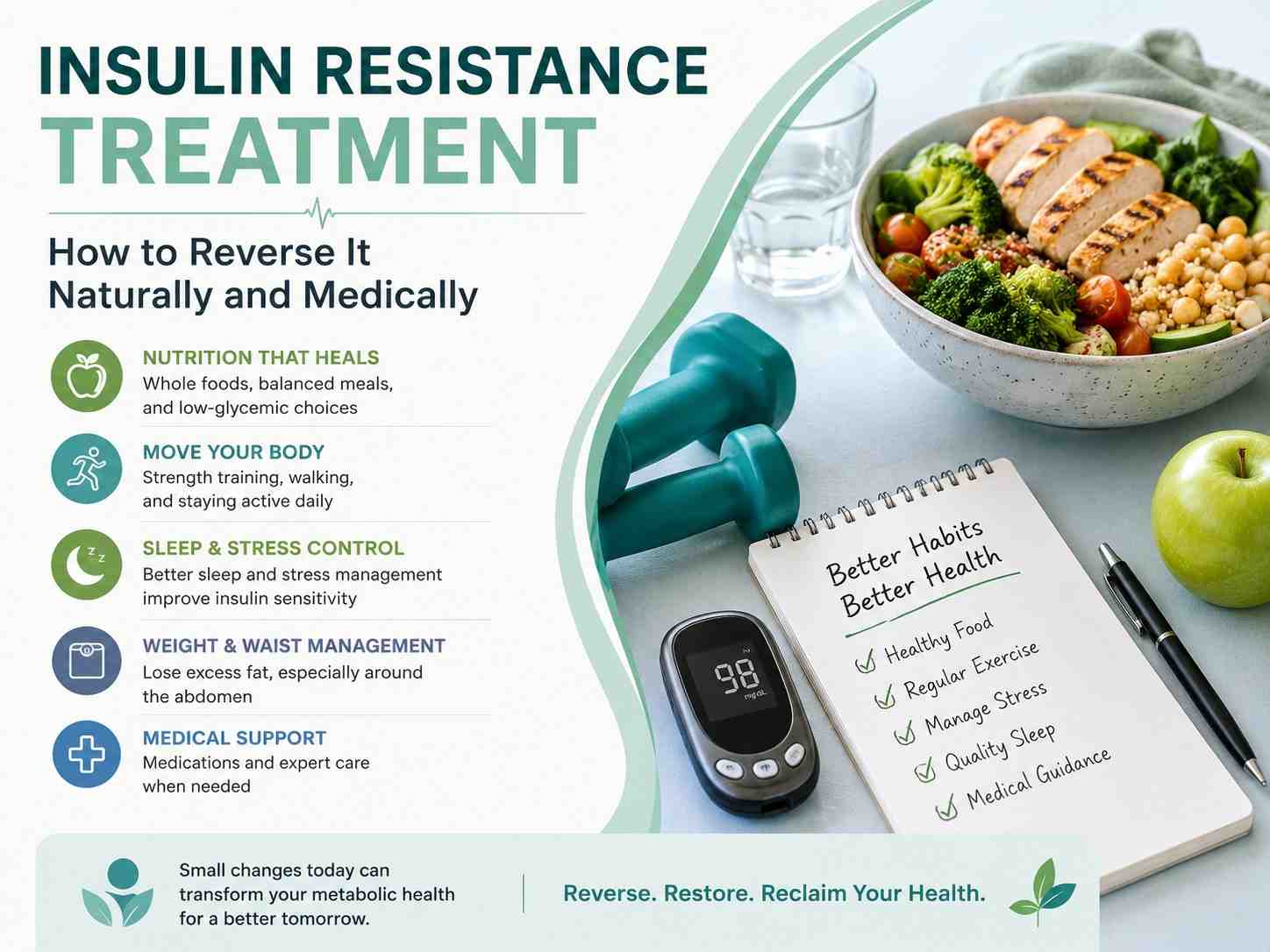
Learn how to reverse insulin resistance naturally and medically with practical diet, exercise, sleep, and treatment strategies.
Insulin Resistance Treatment: How to Reverse It Naturally and Medically
Insulin resistance does not appear overnight, and it usually does not disappear overnight either. It builds slowly, often through a mix of poor sleep, excess abdominal fat, sedentary habits, processed food, and genetic risk. The good news is that it can often be improved, and in many cases reversed, when the right steps are taken early. If you are looking for insulin resistance treatment, the answer is not one single trick. It is a combination of lifestyle changes, metabolic support, and, in some cases, medical treatment.
This article explains how to reverse insulin resistance naturally and medically, without the usual vague advice. You will see what actually helps, what is overhyped, and when it makes sense to involve a doctor. Since insulin resistance is closely linked to Adiposity-Based Chronic Disease (ABCD), treating the root cause is more important than simply controlling blood sugar.
The Real Problem Behind Insulin Resistance
Insulin resistance happens when your body stops responding properly to insulin, the hormone that helps move glucose from the blood into the cells. To compensate, the pancreas starts producing more insulin. For a while, this keeps blood sugar under control. But over time, the system gets strained.
This is why insulin resistance is often linked with belly fat, fatigue, cravings, high triglycerides, fatty liver, and eventually type 2 diabetes. Treating it means improving the body's response to insulin, not just lowering blood sugar numbers. It is considered one of the major metabolic abnormalities seen in Adiposity-Based Chronic Disease.
What Changes First: Food That Stops Feeding the Cycle
Diet is one of the fastest ways to improve insulin sensitivity. The goal is not extreme restriction. The goal is to reduce repeated glucose spikes and lower the demand on insulin.
A practical eating pattern usually includes:
- More protein at each meal
- More fiber from vegetables, legumes, seeds, and whole foods
- Fewer refined carbs, sugary drinks, and ultra-processed snacks
- Controlled portions of starchy foods like rice, bread, and potatoes
- Balanced meals that keep you full longer
Many people do better when they stop eating random carb-heavy meals throughout the day. A plate built around protein, vegetables, and healthy fats is usually more stable for blood sugar and hunger control.
Movement That Actually Improves Insulin Response
Exercise is not only about burning calories. It helps your muscles use glucose more effectively, which reduces insulin demand. That is why movement is a core part of insulin resistance treatment.
The best approach combines two types of activity:
- Strength training: builds muscle, which improves glucose disposal.
- Regular walking or cardio: lowers blood sugar and improves metabolic health.
Even a 10 to 15 minute walk after meals can help. That is not a small detail. It reduces the glucose spike after eating and supports better insulin sensitivity over time.
Sleep and Stress Are Not Side Issues
A lot of people try to fix insulin resistance while ignoring sleep and stress. That does not work well. Poor sleep increases hunger hormones, raises cravings, and worsens glucose control. Chronic stress does something similar by pushing cortisol higher, which can increase abdominal fat and blood sugar instability.
To support recovery, the basics matter:
- Keep a consistent sleep schedule
- Get enough sleep, not just time in bed
- Reduce late-night screen time
- Use stress management tools that are realistic, not theoretical
If your sleep is broken and your stress is high, your diet plan will feel harder than it should.
Weight Loss Helps, but Only if It Is Done Correctly
For many people, even a modest amount of weight loss can improve insulin sensitivity. That does not mean chasing crash diets. Fast weight loss often fails because it is not sustainable and may trigger rebound eating.
The more useful target is steady fat loss, especially from the abdomen. Losing visceral fat improves metabolic health more than simply lowering scale weight. This is one of the reasons why obesity should be viewed as a metabolic disease rather than simply excess weight.
When Natural Methods Are Not Enough
Some people improve with lifestyle changes alone. Others need medical support because the insulin resistance is already advanced, or because they also have obesity, prediabetes, fatty liver, or metabolic syndrome.
Medical treatment is usually considered when lifestyle changes are not enough or when the risk level is already high. Doctors now evaluate metabolic health more comprehensively because BMI alone cannot accurately measure metabolic risk.
Medical Options That May Be Used
Depending on the patient, a clinician may recommend one or more of the following:
- Metformin: often used when insulin resistance is linked to prediabetes or type 2 diabetes risk.
- GLP-1 based treatment: may help with appetite control, weight loss, and metabolic improvement in suitable patients.
- Treatment for related conditions: such as high cholesterol, high blood pressure, or fatty liver.
- Structured medical weight loss programs: useful when obesity is part of the picture.
Medication is not a shortcut. It works best when combined with food changes, movement, and better sleep. Patients with significant metabolic dysfunction may also benefit from GLP-1 therapy for ABCD, when recommended by their healthcare provider.
How to Know the Treatment Is Working
Progress should not be measured only by body weight. Better markers include fewer cravings, more stable energy, smaller waist size, improved fasting glucose, lower HbA1c, better triglycerides, and reduced insulin levels if they are being tracked.
People often notice early wins before lab numbers change. They feel less hungry, stop crashing in the afternoon, sleep better, and begin losing abdominal fat more consistently.
A Simple Treatment Plan That Makes Sense
If you want a realistic starting point, keep it simple:
- Build meals around protein and fiber
- Walk after meals
- Do strength training a few times per week
- Sleep at regular times
- Reduce sugary drinks and refined snacks
- Track waist size, not just weight
- See a doctor if symptoms or lab values are already concerning
This is the kind of approach that actually changes insulin resistance instead of just talking about it.
Related Articles
- Insulin Resistance Symptoms: Signs You Should Not Ignore
- What is Adiposity-Based Chronic Disease?
- ABCD vs Traditional Obesity
- Why BMI Is Not Enough
- GLP-1 Treatment for ABCD
Final Take
The best insulin resistance treatment is not one magic solution. It is a layered approach that combines better nutrition, consistent activity, stress control, sleep correction, and medical treatment when needed. Natural methods can go a long way, but medically guided care becomes important when risk is high or progress stalls.
If you treat insulin resistance early, you are not just lowering a number. You are reducing the chance of diabetes, metabolic syndrome, fatty liver, and long-term cardiovascular problems.
The earlier you act, the easier it is to reverse the cycle.