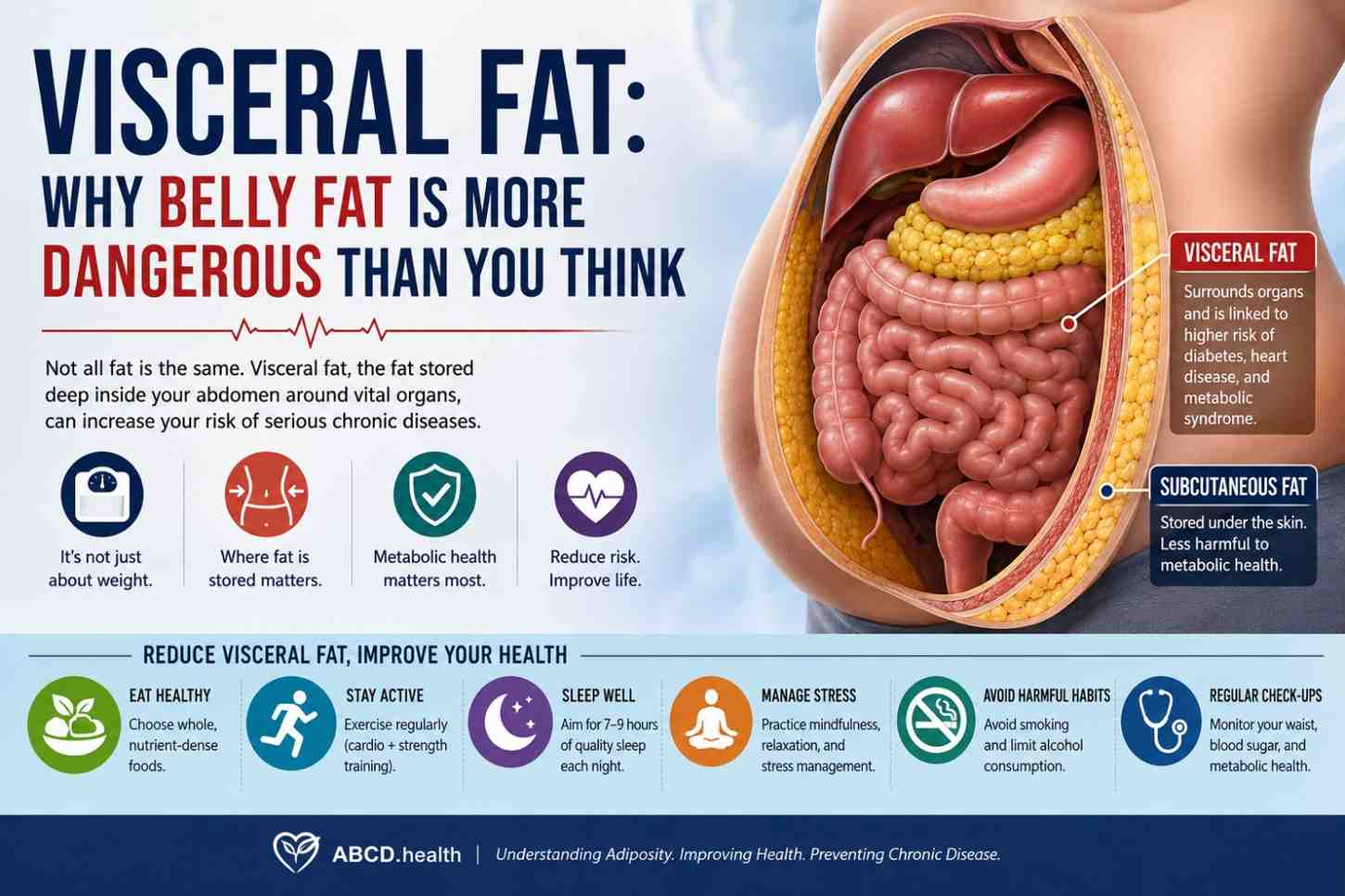
Not all body fat is the same. Learn why visceral fat is more harmful than subcutaneous fat, how it increases the risk of chronic diseases, and what you can do to improve your metabolic health.
Introduction
When people think about body fat, they often focus on what they can see in the mirror. However, the fat that deserves the most attention is often hidden deep inside the abdomen. This fat, known as visceral fat, surrounds important organs such as the liver, pancreas, and intestines. Unlike the fat stored just beneath the skin, visceral fat is biologically active and can significantly influence your metabolic health.
Current medical understanding shows that excess visceral fat is closely linked with insulin resistance, type 2 diabetes, fatty liver disease, cardiovascular disease, and metabolic syndrome. This is why healthcare professionals look beyond body weight alone when assessing an individual's health.
Understanding visceral fat is also central to the concept of Adiposity-Based Chronic Disease (ABCD), which focuses on how excess or dysfunctional adipose tissue affects the body rather than relying only on BMI.
What Is Visceral Fat?
Visceral fat is the fat stored inside the abdominal cavity around internal organs. Although everyone has a small amount of visceral fat for protection and support, excessive accumulation increases the risk of developing chronic metabolic diseases.
Unlike subcutaneous fat, which lies just beneath the skin, visceral fat is more metabolically active. It releases hormones and inflammatory substances that influence blood sugar regulation, cholesterol metabolism, and overall cardiovascular health.
Visceral Fat vs Subcutaneous Fat
Visceral FatSubcutaneous FatLocated around internal organsLocated beneath the skinHigher metabolic riskLower metabolic riskReleases more inflammatory signalsProvides insulation and energy storageAssociated with diabetes and heart diseaseGenerally less harmful when present in healthy amounts
While both types of fat are part of normal human biology, an increase in visceral fat is considered a stronger indicator of future health problems.
Why Is Visceral Fat More Harmful?
Visceral fat is sometimes called active fat because it constantly communicates with other organs through hormones and inflammatory molecules. As visceral fat increases, these signals can disrupt normal metabolic processes throughout the body.
Over time, this may contribute to:
Reduced insulin sensitivity
Higher blood glucose levels
Increased blood pressure
Elevated triglycerides
Fat accumulation in the liver
Greater cardiovascular risk
These changes often develop gradually without obvious symptoms, making regular health assessments especially important.
Who Is More Likely to Have Excess Visceral Fat?
Anyone can develop excess visceral fat, regardless of age or gender. While it is commonly associated with obesity, individuals with a normal BMI can also carry unhealthy amounts of visceral fat. This is one reason why body weight alone does not always reflect metabolic health.
Several factors increase the likelihood of visceral fat accumulation:
A sedentary lifestyle
Regular consumption of highly processed foods and sugary drinks
Poor sleep quality or chronic sleep deprivation
Long-term stress and elevated cortisol levels
Age-related changes in body composition
Family history of type 2 diabetes or cardiovascular disease
Smoking and excessive alcohol consumption
Recognizing these risk factors early allows individuals to make lifestyle changes before serious complications develop.
How Is Visceral Fat Measured?
Unlike subcutaneous fat, visceral fat cannot be accurately estimated by appearance alone. Healthcare professionals use several methods to evaluate abdominal fat and overall metabolic risk.
1. Waist Circumference
Waist circumference is one of the simplest and most practical screening tools. A larger waist often indicates greater abdominal fat and increased cardiometabolic risk.
Learn more about why this matters in our article: Obesity Diagnosis Beyond BMI: Why Waist Circumference and Blood Tests Matter
2. Waist-to-Height Ratio
Many healthcare professionals consider the waist-to-height ratio a useful indicator of central obesity. A commonly used recommendation is to keep your waist circumference below half of your height.
Read our detailed comparison here:
BMI vs Waist-to-Height Ratio: Which Is More Accurate for Health?
3. Medical Imaging
CT scans and MRI scans provide the most accurate assessment of visceral fat, but they are generally reserved for clinical situations rather than routine screening due to cost and availability.
Can You Have Excess Visceral Fat Without Looking Overweight?
Yes. This is one of the most important concepts in modern obesity medicine.
Some individuals maintain a normal body weight but store a disproportionate amount of fat around their abdominal organs. Although they may appear healthy externally, they can still develop insulin resistance, fatty liver disease, or metabolic syndrome.
This is why healthcare professionals increasingly recommend evaluating metabolic health alongside body weight instead of relying on BMI alone.
Did You Know?
A person with a normal BMI may have higher metabolic risk than someone with obesity if they carry more visceral fat and already have metabolic abnormalities.
How Visceral Fat Affects Your Body
Visceral fat is biologically active. As it expands, it releases inflammatory substances and hormones that influence several organs simultaneously.
Over time, excessive visceral fat may contribute to:
Insulin resistance
Prediabetes and type 2 diabetes
Metabolic syndrome
High blood pressure
Fatty liver disease
Abnormal cholesterol levels
Cardiovascular disease
Sleep apnea
These conditions often develop gradually over many years before noticeable symptoms appear.
If you'd like to understand these complications further, these resources may help:
The Connection Between Visceral Fat and Adiposity-Based Chronic Disease
One of the reasons the Adiposity-Based Chronic Disease (ABCD) framework was developed is that it recognizes the importance of fat distribution rather than focusing only on body weight.
Two individuals with the same BMI may have very different levels of visceral fat and, consequently, very different health risks.
The ABCD approach evaluates:
Where fat is stored
Whether adipose tissue has become dysfunctional
The presence of metabolic abnormalities
The severity of obesity-related complications
This comprehensive approach helps healthcare professionals provide more personalized care and intervene before serious chronic diseases develop.
To learn more about the ABCD framework, visit:
https://www.abcd.health/adiposity-based-chronic-disease
How to Reduce Visceral Fat
The good news is that visceral fat responds well to healthy lifestyle changes. Unlike some types of body fat that are difficult to lose, visceral fat often decreases as metabolic health improves. The goal should not be rapid weight loss but sustainable improvements that reduce inflammation and support healthy adipose tissue function.
1. Prioritize Whole, Nutrient-Dense Foods
Your eating pattern has a direct influence on visceral fat accumulation. Choosing minimally processed foods helps improve blood sugar regulation, supports hormone balance, and reduces excess calorie intake without extreme dieting.
Focus on including:
Vegetables and fruits
Whole grains
Lean sources of protein
Beans and legumes
Nuts and seeds
Healthy fats such as olive oil and fatty fish
Limiting sugar-sweetened beverages, highly processed snacks, and excessive refined carbohydrates may also help reduce abdominal fat over time.
2. Stay Physically Active
Regular physical activity is one of the most effective ways to reduce visceral fat. Exercise not only burns calories but also improves insulin sensitivity, preserves muscle mass, and supports overall metabolic health.
A balanced routine may include:
Brisk walking
Cycling
Swimming
Strength training
Yoga or mobility exercises
Even moderate activity performed consistently can produce meaningful improvements.
3. Improve Sleep Quality
Sleep is often overlooked when discussing obesity and metabolic health. Inadequate sleep affects hormones involved in appetite regulation and may contribute to increased visceral fat accumulation.
Most adults benefit from 7–9 hours of quality sleep each night.
4. Manage Stress
Long-term stress can influence eating behaviour and increase cortisol levels, both of which are associated with abdominal fat accumulation. Stress management techniques such as meditation, breathing exercises, spending time outdoors, and regular physical activity may support overall health.
5. Regular Health Check-ups
Many metabolic abnormalities develop silently. Routine monitoring of blood pressure, blood sugar, cholesterol levels, and waist circumference can help detect early changes before serious complications occur.
Can Visceral Fat Be Reduced Without Losing a Lot of Weight?
Yes. Improvements in nutrition, physical activity, sleep, and overall metabolic health can reduce visceral fat even when body weight changes only modestly.
This is one reason healthcare professionals increasingly focus on improving metabolic health rather than pursuing rapid weight loss alone.
Key Takeaway
Improving your lifestyle can reduce harmful visceral fat while supporting better blood sugar control, healthier blood pressure, improved cholesterol levels, and reduced long-term disease risk.
Frequently Asked Questions
1. What is visceral fat?
Visceral fat is fat stored deep inside the abdomen around organs such as the liver, pancreas, and intestines. Excess visceral fat is associated with several chronic health conditions.
2. Why is visceral fat considered harmful?
Unlike subcutaneous fat, visceral fat is metabolically active and releases inflammatory substances that may contribute to insulin resistance, cardiovascular disease, and metabolic syndrome.
3. Can someone with a normal BMI have excess visceral fat?
Yes. Some individuals with a normal BMI may still carry excess abdominal fat and have an increased risk of metabolic disease.
4. How can I measure visceral fat?
Medical imaging provides the most accurate measurement, but waist circumference and waist-to-height ratio are practical screening tools commonly used in clinical practice.
5. Does exercise specifically reduce belly fat?
Regular physical activity helps reduce overall body fat, including visceral fat, especially when combined with healthy eating and other lifestyle improvements.
6. Is visceral fat linked to diabetes?
Yes. Excess visceral fat is strongly associated with insulin resistance and increases the likelihood of developing type 2 diabetes.
7. How does visceral fat relate to Adiposity-Based Chronic Disease?
The ABCD framework recognizes that the location and function of body fat influence health risk. Excess visceral fat is an important indicator of metabolic dysfunction and chronic disease risk.
Final Thoughts
Visceral fat is more than just abdominal fat—it is an important marker of metabolic health. While it cannot always be seen from the outside, excessive visceral fat can significantly increase the risk of insulin resistance, type 2 diabetes, cardiovascular disease, fatty liver disease, and other chronic conditions.
Understanding where fat is stored and how it affects the body is central to the Adiposity-Based Chronic Disease (ABCD) framework. By looking beyond body weight alone, healthcare professionals can identify risk earlier and provide more personalized approaches to improving long-term health.
Small, sustainable lifestyle changes—such as improving nutrition, staying physically active, sleeping well, and managing stress—can make a meaningful difference in reducing visceral fat and supporting better metabolic health.
References
World Health Organization (WHO). Obesity and Overweight Fact Sheet.
https://www.who.int/news-room/fact-sheets/detail/obesity-and-overweightAmerican Association of Clinical Endocrinology (AACE). Clinical Practice Guidelines for Obesity and Adiposity-Based Chronic Disease.
https://pro.aace.com/clinical-guidance/nutrition-and-obesityNational Institute of Diabetes and Digestive and Kidney Diseases (NIDDK). Health Risks of Overweight & Obesity.
https://www.niddk.nih.gov/health-information/weight-management/adult-overweight-obesity/health-risksPubMed. Visceral Adiposity and Cardiometabolic Risk.
https://pubmed.ncbi.nlm.nih.gov/?term=visceral+adiposity+cardiometabolic+riskWorld Health Organization (WHO). Healthy Diet.
https://www.who.int/news-room/fact-sheets/detail/healthy-diet
How Can You Reduce Visceral Fat?
Reducing visceral fat isn't about following fad diets or quick fixes. Small, consistent lifestyle changes can improve your metabolic health and gradually decrease harmful abdominal fat.
Eat a balanced diet rich in vegetables, fruits, whole grains, and lean protein.
Stay physically active with regular aerobic exercise and strength training.
Get 7–9 hours of quality sleep each night.
Manage stress through relaxation techniques and regular physical activity.
Schedule routine health check-ups to monitor blood sugar, cholesterol, and blood pressure.
Even modest improvements in daily habits can help reduce visceral fat and lower the risk of long-term health complications.
Frequently Asked Questions
Can you have visceral fat if you're not overweight?
Yes. People with a normal BMI can still have excess visceral fat, which may increase their risk of metabolic diseases.
How do I know if I have too much visceral fat?
Waist circumference and waist-to-height ratio are useful screening tools. Your healthcare provider may recommend additional assessments if needed.
Is visceral fat different from belly fat?
Yes. Belly fat includes both subcutaneous fat (under the skin) and visceral fat (around internal organs). Visceral fat is considered more harmful to metabolic health.
Can exercise reduce visceral fat?
Yes. Regular physical activity, combined with healthy eating, can significantly reduce visceral fat over time.
Conclusion
Not all body fat has the same impact on your health. Visceral fat, which surrounds your internal organs, is closely linked to conditions such as insulin resistance, metabolic syndrome, fatty liver disease, and cardiovascular disease.
Looking beyond body weight and understanding where fat is stored provides a clearer picture of your overall health. Healthy eating, regular exercise, quality sleep, and routine health check-ups can all help improve metabolic health and reduce visceral fat.
Want to learn more about how body fat affects your health? Visit abcd.health for more articles and resources.