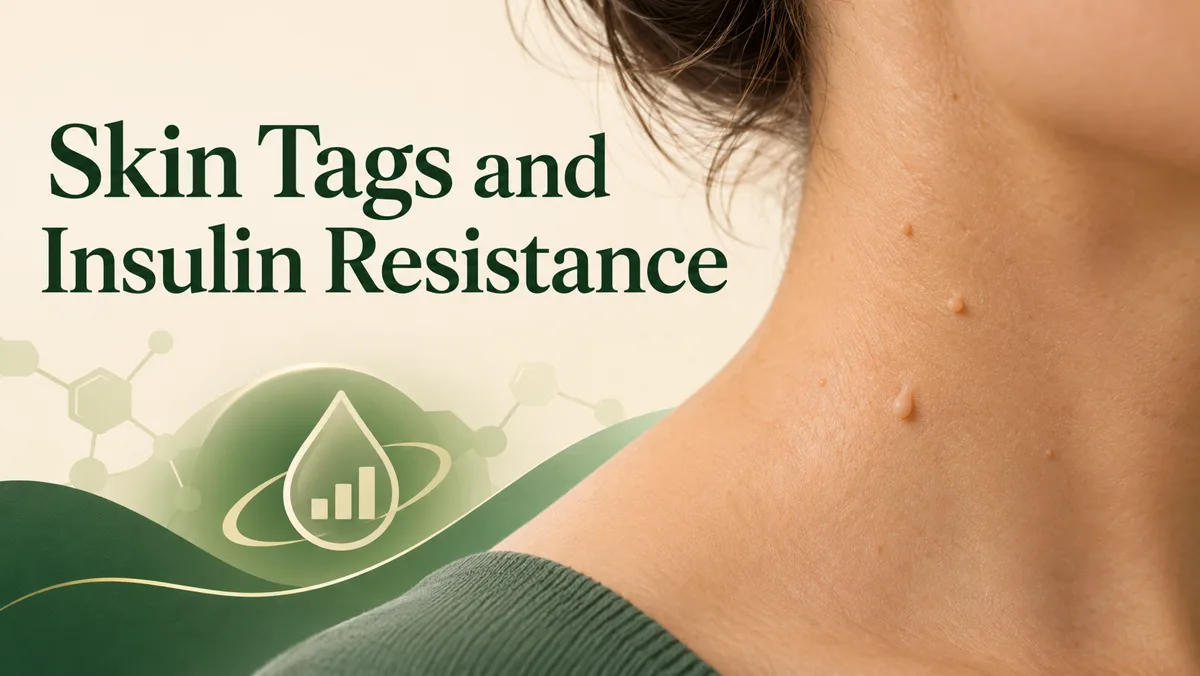
A new skin tag can make you wonder whether it means your blood sugar is high. Skin tags are common, small growths that often appear on the neck, underarms or other areas where skin rubs. They are usually harmless. People
A new skin tag can make you wonder whether it means your blood sugar is high. Skin tags are common, small growths that often appear on the neck, underarms or other areas where skin rubs. They are usually harmless. People with diabetes and metabolic syndrome are more likely to develop them, but a skin tag alone cannot diagnose insulin resistance. Understanding the difference between a clue and a diagnosis helps you avoid both unnecessary alarm and missed opportunities for screening.
What is a skin tag?
A skin tag, also called an acrochordon, is a soft growth attached to the skin by a narrow stalk. It may match the surrounding skin or be slightly darker. Friction, age, pregnancy, family tendency and body weight can all influence who develops them. The American Academy of Dermatology notes that people with diabetes or metabolic syndrome have a higher risk. Many people with skin tags have no known metabolic disease, and some people with insulin resistance have no skin changes at all.
Not every small bump is a skin tag. Warts, moles and other skin lesions can look similar to an untrained eye. A lesion that changes color, bleeds, hurts, grows rapidly or looks unlike your other skin changes deserves a professional examination. Do not tie a thread around it or cut it off at home. Bleeding, infection and removal of the wrong type of lesion are avoidable risks.
Why are skin tags discussed with insulin resistance?
Insulin resistance means the body needs more insulin to handle glucose effectively. It can occur alongside increased waist size, abnormal lipids, higher blood pressure and changes in glucose regulation. Several observational studies have found an association between multiple skin tags and these metabolic features. Association does not tell us that skin tags are caused by high insulin in every individual, or that treating insulin resistance will make existing tags disappear. The biology is still being studied.
ABCD, or adiposity-based chronic disease, looks at the health effects of adipose tissue rather than body weight alone. A visible skin finding may start a useful conversation, but clinical assessment also considers waist circumference, blood pressure, family history and laboratory results. Our article on metabolic risk at a normal BMI explains why a normal scale reading does not rule out risk. Likewise, the presence of one skin tag cannot establish a metabolic diagnosis.
How is this different from acanthosis nigricans?
Acanthosis nigricans typically appears as darker, thicker, velvety skin, often on the back of the neck or in skin folds. It is a different finding from a small tag hanging from the skin. Both can coexist. The ABCD guide to acanthosis nigricans and insulin resistance focuses on that condition. Combining the two under the broad label of “dark neck” can lead to confusion, so describe what you actually see and ask a clinician or dermatologist if unsure.
Skin tags may cluster in areas with friction. Acanthosis can be more diffuse and textured. Neither should be diagnosed from a photo or an online symptom checklist alone. A professional can also identify other dermatologic conditions that require different care. The relevant question is whether the skin finding fits with other risk factors or symptoms that justify metabolic screening.
When should you consider metabolic screening?
Ask a clinician about screening if you have many new skin tags plus a family history of type 2 diabetes, increased waist circumference, high blood pressure, abnormal lipids, prior gestational diabetes, PCOS or other risk factors. The choice of tests depends on your history. Common starting points may include HbA1c or fasting glucose, blood pressure and a lipid profile. A doctor may choose different tests if a result is unreliable or if symptoms suggest another condition.
Do not order a large insulin panel simply because you noticed a tag. Fasting insulin and HOMA-IR can provide context in selected cases, but they are not universal diagnostic tests for one skin lesion. The HOMA-IR versus HbA1c article explains what each measure can and cannot tell you. If you already have an unexpected result, our high fasting insulin with normal blood sugar guide addresses that specific situation.
Should a tag be removed?
Removal is usually considered because a tag catches on clothing, becomes irritated or bothers the person cosmetically, rather than because it poses metabolic danger. A dermatologist can remove a confirmed tag using an appropriate method. Removal does not treat insulin resistance or guarantee that new tags will not appear. Ask for an examination first if the lesion is dark, irregular, inflamed or changing. Avoid over-the-counter products advertised as a way to “detox” or reverse metabolic disease through skin treatment.
A medical review may be appropriate even if you do not want removal. The skin finding can be a prompt to examine habits and risk factors without attaching a frightening label. If blood tests are normal, your clinician may recommend routine follow-up based on age and risk. If a metabolic problem is found, treatment should target the actual condition and your overall health, not just the visible tag.
What supports better metabolic health?
Regular movement, sufficient sleep, a varied eating pattern and appropriate treatment of blood pressure, lipids or glucose are useful for many people. Resistance exercise helps preserve muscle, which plays an important role in glucose handling. The right plan depends on your health conditions and ability. It should not promise that existing tags will shrink. Treat the skin question as one entry point into prevention, with measurable outcomes such as blood pressure and laboratory trends when indicated.
If you have symptoms of high glucose, such as unusual thirst or frequent urination, seek medical advice rather than waiting to see whether the skin changes. If the main concern is a lesion that bleeds or changes, see a dermatologist. The same person may need both skin assessment and metabolic assessment, but they answer different questions. Keeping those questions separate makes care more precise.
Frequently asked questions
Do skin tags mean I have diabetes?
No. They are common in people without diabetes. Multiple tags plus other risk factors may make a conversation about screening worthwhile, but diagnosis requires appropriate clinical tests.
Can a single skin tag show that my insulin is high?
No. One tag cannot measure insulin levels. Your clinician will consider your overall risk before deciding whether tests are useful.
Are skin tags the same as a dark, velvety neck?
No. Darkened, thickened skin may be acanthosis nigricans, a different condition. A clinician can distinguish the findings and assess whether either is relevant to metabolic health.
Will weight loss remove skin tags?
Existing tags often remain even if metabolic health improves. A dermatologist can discuss removal if they cause irritation or bother you. Avoid interpreting a tag's persistence as proof that a health plan has failed.
Can I remove one with a home remedy?
It is safer to have the lesion identified first and, if needed, removed by a trained professional. Home cutting or tying can cause bleeding, infection or removal of a lesion that is not a skin tag.
Sources: American Academy of Dermatology on skin tags and AAD diabetes warning signs on the skin.
This article is general information, not a diagnosis. Visit ABCD Health to learn more about metabolic risk assessment.