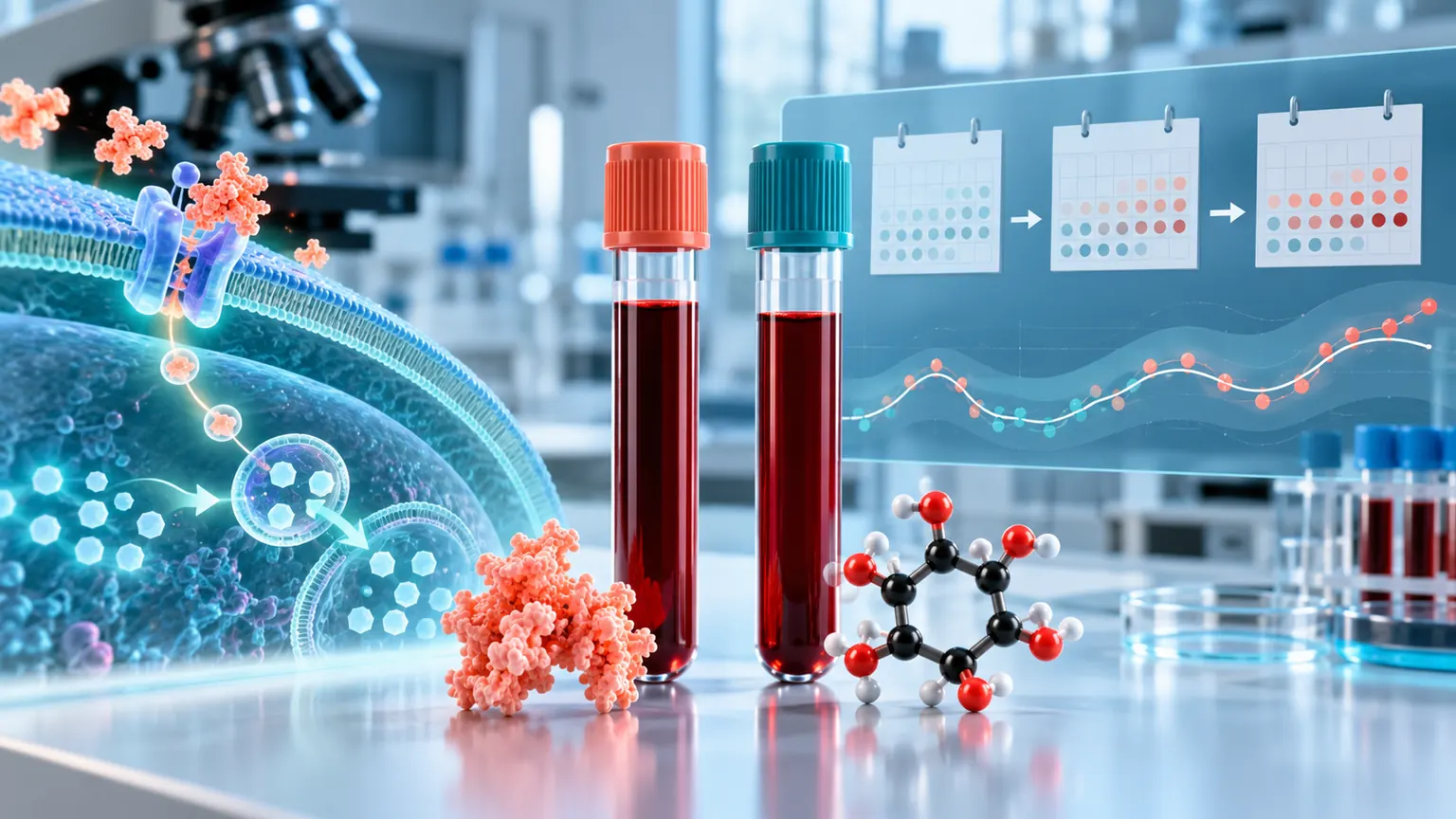
HOMA-IR and HbA1c answer different metabolic questions. Learn how each test works, what can affect it, and why neither should be interpreted alone.
HOMA-IR and HbA1c are often discussed together, but they measure different parts of glucose metabolism. HbA1c estimates average blood glucose over the previous two to three months. HOMA-IR uses fasting glucose and fasting insulin to estimate how hard the body may be working to keep glucose controlled.
That difference explains why a person can have a normal HbA1c while fasting insulin is already elevated. The pancreas may be producing extra insulin to overcome reduced sensitivity in muscle, liver, or fat tissue. Glucose can remain within range during this compensated phase. HOMA-IR may reveal that pattern earlier in selected people, but it is not a universal diagnostic test and does not have one cut-off that fits every laboratory or population.
What does HbA1c measure?
Glucose attaches to haemoglobin inside red blood cells. HbA1c reports the percentage of haemoglobin that has glucose attached, providing an estimate of average glycaemia over the lifespan of circulating red cells. It is widely used to diagnose and monitor prediabetes and diabetes because it does not require fasting and has standardised clinical thresholds.
HbA1c is valuable, but it describes glucose exposure rather than insulin demand. It may remain normal while the pancreas compensates with higher insulin output. It also smooths highs and lows into one average, so two people with the same HbA1c may have different daily glucose patterns.
The NIDDK guide to the A1C test notes that anaemia, blood loss, transfusion, kidney or liver disease, pregnancy, haemoglobin variants, and altered red-cell lifespan can affect interpretation. A result that does not fit the clinical picture may need confirmation with another method.
What does HOMA-IR measure?
HOMA-IR stands for Homeostatic Model Assessment of Insulin Resistance. It is calculated from fasting insulin and fasting glucose. The common formula using glucose in mmol/L is fasting insulin multiplied by fasting glucose, divided by 22.5. A different formula is used when glucose is reported in mg/dL.
The result is an estimate, not a direct measurement of insulin action. The research reference method is a hyperinsulinaemic-euglycaemic clamp, which is complex and rarely practical for routine care. HOMA-IR offers a simpler way to describe fasting insulin resistance in research and selected clinical assessments.
A systematic review of HOMA-IR and health outcomes found that higher HOMA values were associated with future type 2 diabetes, hypertension, and non-fatal cardiovascular events. Association does not create a universal diagnostic threshold, but it supports the value of recognising insulin resistance before overt hyperglycaemia.
Which test changes earlier?
In the common progression toward type 2 diabetes, insulin sensitivity may decline first. The pancreas responds by producing more insulin. Fasting or post-meal insulin can rise while fasting glucose and HbA1c remain normal. In that situation, fasting insulin and HOMA-IR may identify metabolic strain earlier than HbA1c.
That does not mean HOMA-IR always changes first or is always the better test. Insulin secretion differs between individuals and populations. Some people cannot compensate effectively and develop rising glucose without a long period of high insulin. Acute stress, sleep loss, illness, medicines, fasting duration, and laboratory assay differences can influence results.
The ABCD Health article on high fasting insulin with normal blood sugar explains this compensated stage in more detail.
Why HOMA-IR cut-offs vary
Unlike HbA1c diagnostic thresholds, HOMA-IR does not have one globally accepted cut-off. Published thresholds differ by age, sex, ethnicity, body composition, laboratory insulin assay, health status, and study purpose. A number copied from a research paper may not apply to an individual patient.
Insulin assays are less harmonised than glucose testing, and fasting insulin can vary from day to day. The result should therefore be interpreted with the laboratory method, local reference information, and the wider metabolic pattern. It is more useful as one piece of evidence than as a pass-or-fail score.
When HbA1c is more useful
HbA1c has clear advantages for diagnosing and monitoring chronic hyperglycaemia. It is standardised, familiar, and linked to established diabetes thresholds. It is especially helpful for following average glucose after a treatment change, provided no condition is distorting the result.
HOMA-IR should not replace HbA1c, fasting plasma glucose, or an oral glucose tolerance test when the clinical question is diabetes diagnosis. It answers a different question: how much fasting insulin appears necessary to maintain the observed fasting glucose.
A practical comparison
| Feature | HOMA-IR | HbA1c |
|---|---|---|
| Main input | Fasting insulin and fasting glucose | Glycated haemoglobin |
| Main question | Estimated fasting insulin resistance | Average recent glucose exposure |
| Fasting needed | Yes | No |
| Standard diagnostic cut-off | No universal cut-off | Established diabetes and prediabetes thresholds |
| May detect compensation | Potentially, when insulin is high before glucose rises | Not directly |
| Important limitations | Assay variation and population-specific interpretation | Red-cell, haemoglobin, kidney, liver, and pregnancy effects |
What other information should be reviewed?
Insulin resistance is not a single laboratory number. A clinician may review waist circumference, blood pressure, triglycerides, HDL cholesterol, liver enzymes, fatty liver, sleep, family history, physical activity, medicines, and reproductive or hormonal history. A glucose tolerance test may be useful when fasting tests do not explain symptoms or risk.
Body composition matters because visceral fat and low muscle can worsen metabolic function even when BMI is not very high. Read the ABCD Health guide to sarcopenic obesity for the combination of excess fat and reduced muscle.
What to do when HOMA-IR is high but HbA1c is normal
Do not panic or start medication based on one calculation. First confirm that the sample was truly fasting and review glucose and insulin units. Discuss whether illness, steroids, sleep disruption, or other factors could have affected the result. Repeat testing may be reasonable when the value is unexpected.
The response usually focuses on the underlying risk pattern: consistent movement, resistance training, adequate sleep, meals rich in protein and fibre, fewer refined carbohydrates, and gradual reduction of excess visceral fat when relevant. The ABCD guide to improving insulin sensitivity naturally provides a practical foundation.
Testing should lead to a plan. Repeating HOMA-IR very frequently without changing sleep, diet, activity, or medical management creates data without progress.
Frequently asked questions
Can HOMA-IR diagnose insulin resistance?
It estimates fasting insulin resistance and can support assessment, but there is no universal diagnostic cut-off. It should be interpreted with the laboratory method and clinical context.
Can HbA1c be normal in insulin resistance?
Yes. Higher insulin output may keep average glucose normal for a period. Other metabolic signs may appear before HbA1c reaches the prediabetes range.
Do I need to fast for HOMA-IR?
Yes. The calculation relies on fasting insulin and fasting glucose collected under appropriate conditions. Follow the laboratory and clinician's fasting instructions.
Which is better for diagnosing diabetes?
HbA1c, fasting plasma glucose, and the oral glucose tolerance test have recognised diagnostic roles. HOMA-IR is not a replacement for standard diabetes diagnosis.
Can one high fasting insulin result be misleading?
Yes. Biological variation, fasting duration, stress, illness, sleep, medicines, and assay differences may influence it. Unexpected results deserve confirmation and context.
How often should HOMA-IR be repeated?
There is no universal schedule. Repeat testing should be timed to the risk level and whether enough time has passed for a lifestyle or treatment change to have a meaningful effect.
Use both tests for the question they answer
HbA1c is a standard measure of recent average glucose. HOMA-IR is an estimate of fasting insulin resistance. HOMA-IR may reveal compensated metabolic dysfunction earlier in selected people, but its interpretation is less standardised. The most useful assessment combines appropriate tests with body composition, blood pressure, lipids, liver health, sleep, activity, and medical history.
This article provides general education and is not a diagnosis or personalised treatment plan.