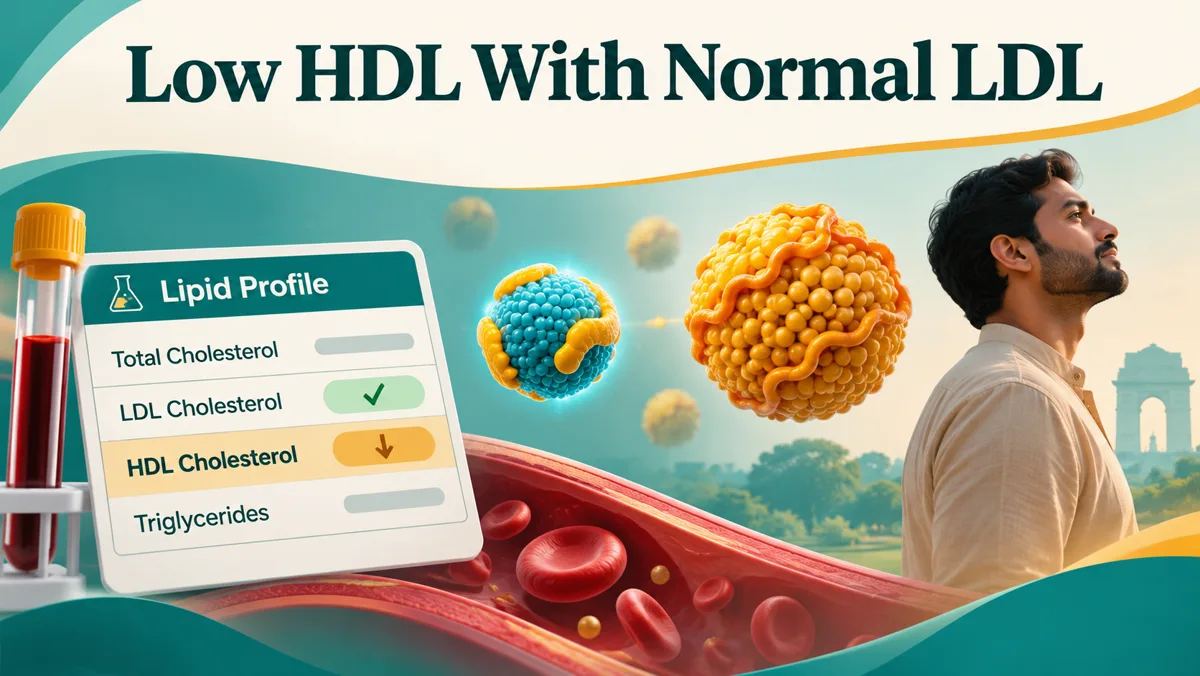
Low HDL with normal LDL needs context. Learn how to read the full lipid pattern and which metabolic and cardiovascular risks to discuss.
A lipid report can be confusing when LDL cholesterol looks acceptable but HDL cholesterol is flagged low. Is the report reassuring, or is low HDL a sign of metabolic trouble? The answer depends on the full pattern: triglycerides, blood pressure, glucose, waist size, smoking, family history and whether someone already has cardiovascular disease. One isolated result is rarely enough to decide risk or treatment.
This guide focuses on the question patients ask when they see low HDL beside a seemingly normal LDL value. ABCD Health has separate articles on high triglycerides with normal LDL and the triglyceride-to-HDL ratio. Those articles explore different report patterns. Here, the key question is what to do when HDL is the number that stands out.
First, understand what HDL and LDL measure
HDL and LDL are cholesterol-carrying lipoprotein categories, not direct measures of how much fat is stored in the body. LDL particles can deposit cholesterol in artery walls over time. HDL is involved in cholesterol transport and other processes, but a high HDL number is not a guarantee of protection. The American Heart Association emphasizes that LDL goals vary with overall risk rather than a single universal definition of normal.
Laboratories use reference ranges, but the word normal on a report may not mean optimal for a person with diabetes, established heart disease or a strong family history. The same LDL value can lead to different decisions in two people. Before interpreting low HDL, confirm the units, the date, whether the test was repeated and whether the rest of the lipid panel is available. A clinician may also consider non-HDL cholesterol or ApoB in selected situations. Our ApoB versus LDL guide explains when particle-related information can add insight.
Why low HDL can accompany metabolic risk
Low HDL often appears with higher triglycerides, larger waist circumference, higher blood pressure or rising glucose. This cluster can reflect insulin resistance and visceral adiposity. The American Heart Association's metabolic syndrome overview lists low HDL as one of five risk factors considered together. A diagnosis requires the appropriate combination of findings, not low HDL by itself.
The pattern matters because a person can have substantial cardiometabolic risk without a dramatically high LDL number. In adiposity-based chronic disease, the clinical question is how excess or dysfunctional adipose tissue is affecting organs and metabolism. That is why ABCD Health discusses diagnosis beyond BMI. Waist measures, blood pressure and blood tests can reveal risks that body weight alone misses.
Still, low HDL does not prove insulin resistance. Genetics, smoking, some medicines, chronic illness, physical inactivity and other factors can influence the result. Very low values, sudden changes or unusual combinations may deserve a separate medical investigation. Avoid diagnosing yourself from a single online ratio calculator.
What if triglycerides are normal too?
Low HDL with normal triglycerides and LDL is a different pattern from the classic high-triglyceride, low-HDL picture. A clinician may review family history, smoking, activity, diet, medicines and whether there is known vascular disease. Some people have a persistently low HDL level due largely to inherited factors. The next step is still an overall risk assessment, because raising HDL on paper does not necessarily translate into fewer heart attacks.
Ask whether your LDL was calculated or directly measured and whether recent illness or medication changes could affect the panel. A repeat test may be reasonable if the result is unexpected, but testing intervals should follow clinical need. A clinician may want glucose or HbA1c, blood pressure and waist data if those are missing. These are not automatic orders for every person; each test should answer a question that changes care.
Should you take a medicine just to raise HDL?
The goal of prevention is to reduce cardiovascular events, not to make one laboratory number look better. Medicines that raise HDL have not consistently delivered the expected benefit when used only for that purpose. Treatment decisions usually focus on overall risk and on therapies with evidence of reducing events, especially when LDL or other atherogenic lipoproteins require attention. A person already taking a statin should not stop it because HDL remains low.
The 2026 American Heart Association dyslipidemia guidance highlights risk assessment and LDL-related treatment decisions, with ApoB useful in selected cases such as elevated triglycerides or diabetes. A clinician can explain whether an additional marker would change the plan. Supplements marketed as an HDL fix should be treated cautiously, especially if they are proposed in place of proven care.
Which everyday actions are worth prioritizing?
The most useful actions address risk across several pathways at once. If you smoke, getting help to stop is more valuable than chasing a small HDL change. Regular aerobic activity and strength work support cardiovascular and metabolic health even when the laboratory response is modest. A sustainable eating pattern built around vegetables, fruit, legumes, whole grains, nuts and appropriate protein sources can help blood pressure, glucose and lipids. If waist size or excess adiposity is contributing to risk, a realistic weight-management plan may improve multiple markers.
Sleep, alcohol intake and medication review also deserve attention. For someone with diabetes or high blood pressure, treating those conditions matters even if the lipid panel looks close to normal. The ABCD Health guide to insulin sensitivity covers lifestyle changes that can support metabolic health without promising a specific HDL increase. Do not add intense exercise or a restrictive diet abruptly if you have symptoms or a significant medical condition; ask for a safe starting plan.
A practical checklist for the next appointment
Bring the complete lipid report and any older results. Ask what your overall cardiovascular risk looks like, not just whether HDL is below the laboratory range. Discuss blood pressure, glucose, waist measurement, smoking status, activity and family history. Ask whether LDL is at an appropriate level for your risk and whether non-HDL cholesterol or ApoB would add useful information. If triglycerides are high, use the separate triglyceride article rather than assuming the low-HDL explanation covers everything.
Finally, agree on a plan you can measure. That may involve a repeat lipid panel after a period of lifestyle change, follow-up of blood pressure or glucose, or medication when indicated. A useful plan names both the action and the reason for it. Low HDL is a clue to review the whole picture, not a verdict by itself.
Frequently asked questions
Can low HDL cause a heart attack if LDL is normal?
Low HDL may be associated with higher risk, but one value does not establish that an individual will have an event. Risk depends on many factors, including LDL exposure, blood pressure, diabetes, smoking and previous cardiovascular disease.
Is low HDL the same as insulin resistance?
No. Low HDL can occur with insulin resistance, especially when triglycerides and waist size are also high, but it is not a diagnostic test for insulin resistance.
Should I take niacin or another supplement to raise HDL?
Do not start a supplement solely to change the HDL number without discussing evidence and risks with your clinician. Improving a number is not the same as proving fewer cardiovascular events.
Can exercise improve HDL?
Regular activity can modestly influence HDL in some people and improves health through other pathways. The benefit of exercise does not depend on achieving a particular HDL result.
How often should I repeat my lipid test?
The interval depends on your risk, any treatment change and whether the initial result was unexpected. Ask the clinician what decision the next test will inform.
ABCD Health provides education on adiposity and metabolic risk. Use this article to prepare questions for your own clinician, not as a diagnosis or a replacement for individualized care.