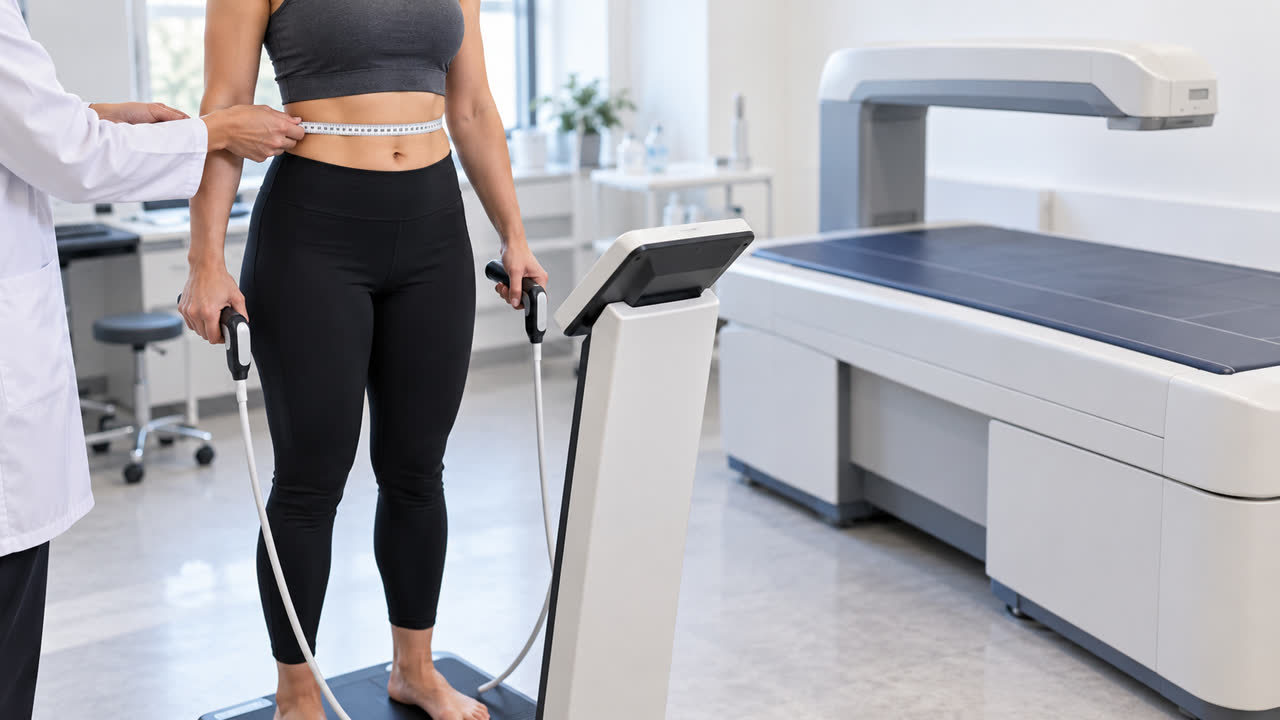
Compare DEXA, BIA and waist circumference for body composition and metabolic risk. Learn what each measures, its limits and which question it answers.
DEXA vs BIA vs Waist: Which Body Test Do You Need?
DEXA vs BIA vs waist circumference is a common question when a person wants to understand body composition and metabolic risk. A bathroom scale reports total weight, but it cannot show how much is fat, where that fat is carried, or whether muscle has changed. Each of these three methods answers a different question. The most useful choice depends on the decision you and your clinician are trying to make, not on which device produces the most numbers.
For adiposity-based chronic disease, or ABCD, the concern is not simply a high body weight. The pattern of fat distribution, complications such as high blood pressure or insulin resistance, and the effect on health are central. Measurements can support that assessment, but none can diagnose ABCD alone. This guide explains what the tools measure, where they can mislead, and how to use them alongside a clinical review.
Start with the question, not the machine
If the question is whether central adiposity may be adding cardiometabolic risk, a carefully measured waist can be a useful first step. If the question is whether fat and lean tissue are changing during treatment, a repeatable body composition method may help. If the question is whether low bone density is present, a clinician may request a bone-density DEXA examination. These are related but distinct purposes. A scan for bone health is not automatically the same protocol as a whole-body composition scan.
A method only matters if its result changes an action. Before buying a scan or interpreting a smart-scale report, ask: What decision will this number support? What other information is needed? Will we measure it in the same way next time? The answers prevent a single device score from becoming an unnecessary source of anxiety.
What does waist circumference measure?
A waist measurement is simple, inexpensive and repeatable. It does not calculate body-fat percentage or directly image visceral fat. Instead, it provides a practical measure of abdominal size that can add information beyond BMI. For a reliable comparison over time, use the same landmark, a flexible non-stretch tape, relaxed breathing and a consistent method. Record how and where the measurement was taken because different landmarks can produce different values.
Waist circumference is particularly useful when weight appears stable but abdominal size is changing. It can also prompt a broader discussion in someone with a BMI in the normal range. However, a larger or smaller waist is not a diagnosis. Pregnancy, fluid retention, abdominal distension, posture and measurement technique can affect the result. Ethnicity, sex, age and clinical context also influence how risk is interpreted. Our article on why BMI is not enough explains why a single body-size number misses important information.
What is BIA and what does it estimate?
Bioelectrical impedance analysis, or BIA, passes a small electrical signal through the body and measures resistance. A device then uses equations to estimate total body water, fat-free mass and fat mass. Some professional systems estimate regional values and may provide a number labelled visceral fat. These are estimates derived from a model, not a direct photograph of internal fat. Different brands can use different equations, so their outputs may not agree for the same person.
BIA is convenient because it is quick and does not involve ionising radiation. It may be useful for following a trend when measurements are made under similar conditions on the same device. Hydration matters. A large meal, vigorous exercise, alcohol, fever, oedema or an unusually dry day can shift the reading without a real change in tissue. For follow-up, consider measuring at a consistent time, with similar food and fluid intake and according to the device's instructions. Do not compare one machine's body-fat percentage with another as though they were interchangeable.
Some devices have manufacturer restrictions for people with pacemakers or other implanted electronic devices. Follow those instructions and ask a clinician if uncertain. People with substantial fluid shifts or severe obesity may need special interpretation because assumptions behind the BIA equations can be less reliable. A very precise-looking decimal on the printout does not guarantee clinical accuracy.
What can a whole-body DEXA scan show?
Dual-energy X-ray absorptiometry, often written DXA or DEXA, uses low-dose X-rays to estimate bone mineral, fat mass and lean soft tissue. A whole-body protocol can report distribution across body regions and can be useful when changes in muscle and fat are important to follow. DXA is widely used as a reference method in body-composition research. It still makes estimates and requires correct positioning, calibration and interpretation.
DEXA does not directly prove that every kilogram of lean soft tissue is functioning muscle. Some devices estimate visceral adipose tissue through algorithms, so the displayed visceral-fat number is not the same as a direct CT or MRI measurement. Access, equipment limits and radiation exposure, though low, are practical considerations. Pregnancy should be discussed with the imaging provider. Repeating scans frequently without a clear reason rarely improves a care plan.
A bone-density scan requested for osteoporosis has a different primary purpose from a whole-body composition assessment. When booking, confirm which test is ordered and what result you need. A body-composition scan does not replace examination, blood pressure or laboratory assessment. It can complement them when a specific clinical question exists.
How do the three methods compare in real life?
Waist circumference is the most accessible way to monitor abdominal size, but it cannot tell you how much lean mass you have. BIA gives a fast estimate of several body compartments and can track trends, but its output is sensitive to conditions and device equations. DEXA provides a more detailed whole-body estimate and bone information, but it requires an imaging appointment and should be used for an appropriate indication. The methods are complementary rather than direct substitutes.
Imagine two adults with the same BMI. One has a larger waist, reduced strength and elevated blood pressure. The other has a smaller waist, good function and normal metabolic results. Their risk profiles may be different despite identical BMI. Conversely, a person with a reassuring body-fat percentage can still have a condition requiring care. That is why ABCD staging looks at complications and function as well as adiposity.
Which test is sensible during weight loss?
During weight loss, preserving muscle matters. A person may lose scale weight while also losing lean tissue, especially if nutrition and resistance training are neglected. A consistent waist measure, strength or physical-function assessment, and selected body-composition measurements can give a fuller picture. Our article on sarcopenic obesity explains why high fat and low muscle can coexist.
Do not interpret every week-to-week BIA change as a real change in muscle. Short-term variation may reflect fluid. Look for a pattern over time, along with food intake, activity, symptoms, waist and clinical markers. If a DEXA scan is ordered, discuss the interval at which repeating it would actually affect treatment. Measurements should support sustainable action, not encourage extreme dieting to improve a score.
Questions to ask before a body-composition test
Ask the provider what the device measures directly, what it estimates, whether the method is validated for someone with your age and body size, and how to prepare. Clarify whether the purpose is bone density, body composition or both. If your result will be used to judge progress, ask how repeat measurements will be standardised. A clinician can then place the result beside waist, blood pressure, glucose, lipids, liver health and physical function.
If you have a medical condition or are changing treatment, do not let a consumer scale make the decision for you. The ABCD framework is intended to connect body composition with actual health complications. You can learn more about ABCD stages or contact ABCD Health for an individual assessment.
Frequently asked questions
Is DEXA more accurate than BIA?
Whole-body DEXA is often used as a reference method, but it is not perfect. BIA can be useful for trends when the same validated device and consistent conditions are used. The right choice depends on the question and the person.
Can BIA measure visceral fat directly?
Most BIA devices estimate a visceral-fat-related value through equations. They do not directly image the fat surrounding internal organs. Treat that value as one contextual clue, not a diagnosis.
Is waist measurement enough to diagnose ABCD?
No. Waist can contribute to risk assessment, but ABCD evaluation also considers adiposity-related complications, medical history, examination and tests where appropriate.
Does a normal BMI make body composition testing unnecessary?
Not always. BMI does not distinguish fat from muscle or show distribution. A clinician may consider other measures when symptoms, a growing waist or abnormal metabolic results suggest a concern.
How often should I repeat measurements?
The interval should match a decision in your care plan. Frequent measurements may mainly capture normal fluid variation. Discuss a realistic follow-up schedule with the clinician interpreting the results.
Sources and further reading
Obesity Medicine Association clinical practice statement on body composition; Expert-endorsed methods guide for body-composition assessment.