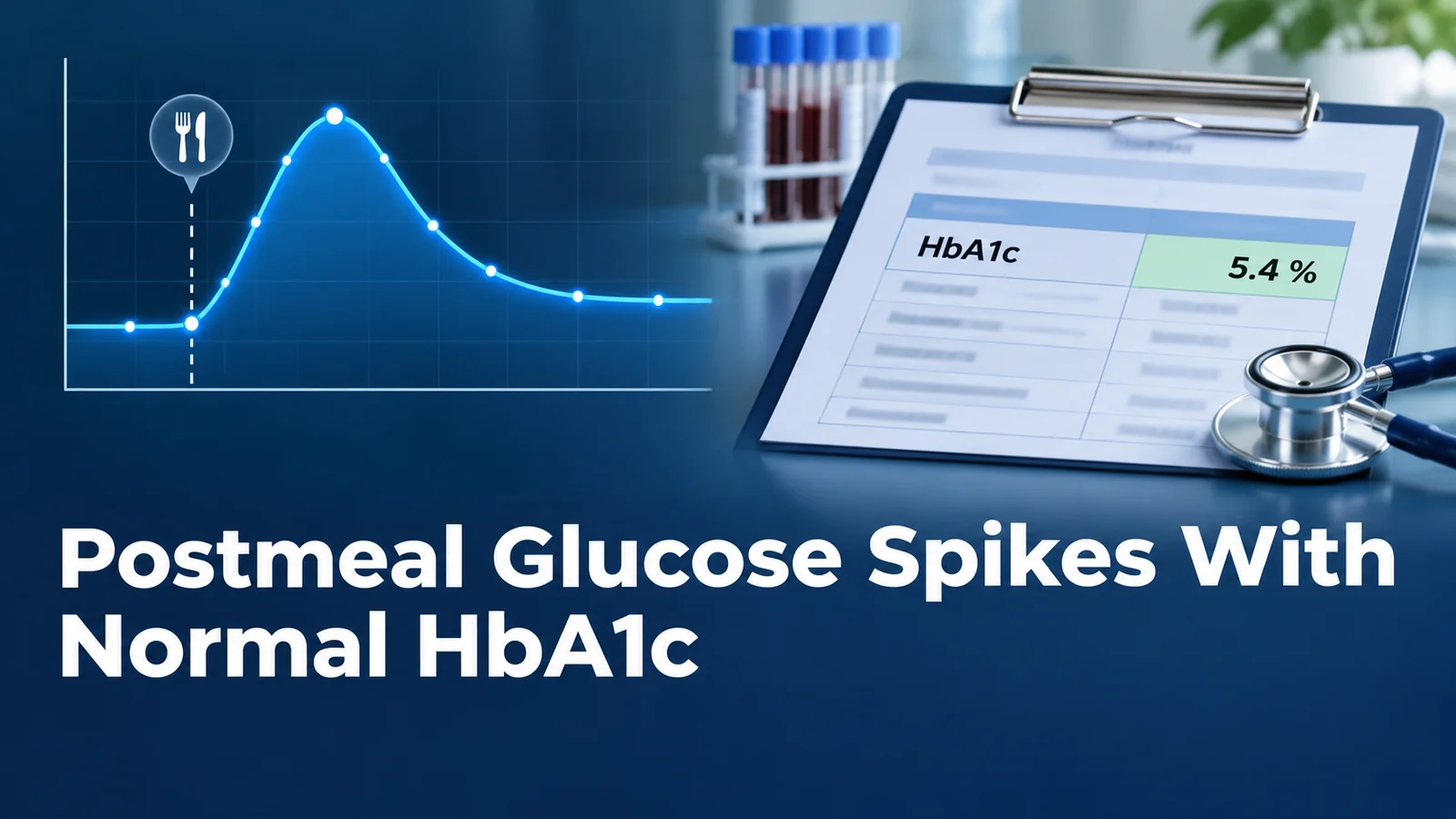
A normal HbA1c can coexist with postmeal glucose rises. Learn how to interpret readings and when targeted testing may help.
Postmeal Glucose Spikes With Normal HbA1c
You eat lunch, check a glucose monitor and see a number that seems much higher than your normal HbA1c would suggest. Does that mean your blood test missed diabetes? Not necessarily. HbA1c and a postmeal glucose reading measure different things. A1c estimates average glucose exposure over several months, while a finger-stick or sensor shows glucose near one moment. A brief rise after a meal is expected. The question is whether the pattern is repeated, accurately measured and clinically relevant for you.
This article is about interpreting the disagreement between a normal HbA1c and occasional postmeal rises. It does not replace our guide to HOMA-IR versus HbA1c, which compares tests for insulin resistance. The NIDDK A1c explanation states plainly that A1c is a long-term average and does not show sudden temporary increases or decreases.
What counts as a postmeal glucose spike?
There is no one universal threshold for every healthy adult and every device. Glucose rises after carbohydrate-containing meals because digestion releases glucose into the bloodstream. The size and duration of that rise depend on the meal, movement, sleep, stress, illness and an individual's physiology. A reading taken 30 minutes after eating cannot be compared directly with one taken two hours after eating. Nor should a consumer sensor's highest single dot be treated like a diagnostic laboratory result.
Start by recording when the meal began, what you ate, when the reading was taken and whether it was measured by a lab, finger-stick meter or continuous glucose monitor. Repeatable patterns matter more than a dramatic screenshot. A sensor also measures glucose in interstitial fluid rather than directly in blood, and readings may lag during rapid change. If a value is surprising or accompanied by symptoms, confirm it with an appropriate method and speak with a clinician rather than diagnosing yourself from an app.
Why can HbA1c remain normal?
An average can hide variation. If glucose is in a usual range for most of the day but rises after some meals, the overall average may remain below the HbA1c threshold used for prediabetes. The 2026 American Diabetes Association standards note that A1c does not measure day-to-day glucose variability or low glucose episodes. This is a limitation of the test, not evidence that every postmeal rise is dangerous.
A1c may also be less reliable when red blood cell turnover or hemoglobin differs from the usual pattern. Recent blood loss, some anemias, transfusion, kidney disease and certain hemoglobin variants can affect interpretation. The NIDDK guide describes these situations and why clinicians may use another test when results do not match. Do not assume that a normal A1c is falsely reassuring for everyone, but do tell your clinician about conditions that could make it less informative for you.
Is one high reading a diagnosis?
No. Diabetes and prediabetes are diagnosed with accepted laboratory tests and criteria, interpreted in context and often confirmed when symptoms are absent. An isolated home-meter or CGM value after a large meal does not establish either condition. Even two people eating the same meal can have different curves. Sleep loss, infection, steroid medicines and the time of day may alter the response. Repeating a test without a clear question can create worry without improving care.
If a clinician suspects impaired glucose tolerance despite a normal fasting result or HbA1c, they may consider an oral glucose tolerance test or other assessment. Which test is useful depends on history, family risk, prior results and symptoms. People with intense thirst, frequent urination, unexplained weight loss or repeated clearly abnormal readings should seek medical assessment rather than waiting for the next routine health check.
How does this relate to adiposity-based chronic disease?
ABCD looks beyond body weight to the health effects of adipose tissue and related metabolic changes. Someone can have normal HbA1c yet carry excess visceral fat, elevated blood pressure, abnormal lipids or other signs that deserve attention. Conversely, a single postmeal curve cannot tell you whether you have ABCD. See our guide to metabolic risk at a normal BMI for why risk assessment needs multiple measures.
People interested in insulin resistance sometimes jump from a glucose spike straight to the conclusion that their insulin is high. The body may need to release more insulin to manage a meal, but glucose alone does not measure insulin secretion or sensitivity. Our article on high fasting insulin with normal blood sugar explains a different pattern. A clinician can decide whether any insulin-related test would change your care.
What can you change without chasing a perfectly flat curve?
Think about the overall meal and routine. A plate with vegetables, a protein source and a suitable portion of carbohydrate is usually more useful than eliminating carbohydrates entirely. Fibre-rich foods and less highly refined starch can change the speed of digestion. If you eat rice or roti, consider the meal as a whole: vegetables, dal, curd, eggs, fish or another protein source may make it more satisfying and nutritionally balanced.
Movement after a meal can help muscles use glucose. A short walk may be realistic during a workday, but it is not a treatment for a repeated abnormal glucose result. Sleep, regular activity and long-term weight or waist changes may influence metabolic health more than optimizing one sensor peak. If you use insulin or medicines that can lower glucose, discuss any changes in activity or meals with your treatment team. The ABCD guide to improving insulin sensitivity covers the broader habits.
Do not let a device turn normal eating into a daily alarm. The clinical goal is reducing meaningful risk and improving health, not producing a straight line on a graph. An apparently flat curve achieved by undereating or skipping necessary meals is not a success. A useful monitoring plan has a question, a defined duration and a decision that could change because of the results.
What to take to a consultation
Bring the HbA1c report, the device type, the timing of a few representative readings and information on symptoms, medicines and family history. Ask whether a laboratory glucose test or oral glucose tolerance test is appropriate. Ask whether waist circumference, blood pressure and lipids change the interpretation of the reading. A clinician may conclude that no further test is needed, or that one targeted test would be more informative than several weeks of sensor data.
ABCD Health can help place glucose readings within a wider metabolic assessment. Use the ABCD Health website to learn how the ABCD framework connects glucose, adiposity and related risk. This article is educational and does not diagnose diabetes or prescribe treatment.
Frequently asked questions
Can I have a normal HbA1c and still have prediabetes?
Yes, different accepted tests can sometimes disagree. A clinician may use fasting plasma glucose or an oral glucose tolerance test when history suggests that further evaluation is warranted.
Does a glucose rise after rice mean I should stop eating rice?
No. Meal size and composition, timing, movement and individual factors all affect a reading. A balanced plan is more useful than making a major dietary restriction from one measurement.
Is a CGM required if I do not have diabetes?
Generally no. It may be used for a specific clinical question, but a routine CGM for every healthy adult is not established as necessary care.
Can a sensor reading be wrong?
Yes. Sensor measurements can lag behind blood glucose during rapid change and may be affected by device factors. Confirm unexpected results with an appropriate test, especially if symptoms do not match.
What if I also feel thirsty or lose weight unexpectedly?
Seek medical assessment. Those symptoms can warrant timely testing even if an older HbA1c report was normal.